A completely objective, scientifically rigorous, not-at-all-argued-about-in-the-group-chat list of the tacos every human should eat at least once. In no particular order. Okay, a little bit of an order.
[Read more…] about 15 Tacos to Eat Before You DieTacos al Pastor at Home (No Trompo Required)
Prep (min)
30
Cook (min)
25
Total
4 hrs (includes marinating)
Serves
4 (12 tacos)
Difficulty
Medium
Heat 🌶
3
🥄 Pairs well with: Salsa Verde Cruda, Salsa Roja de Chile de Árbol
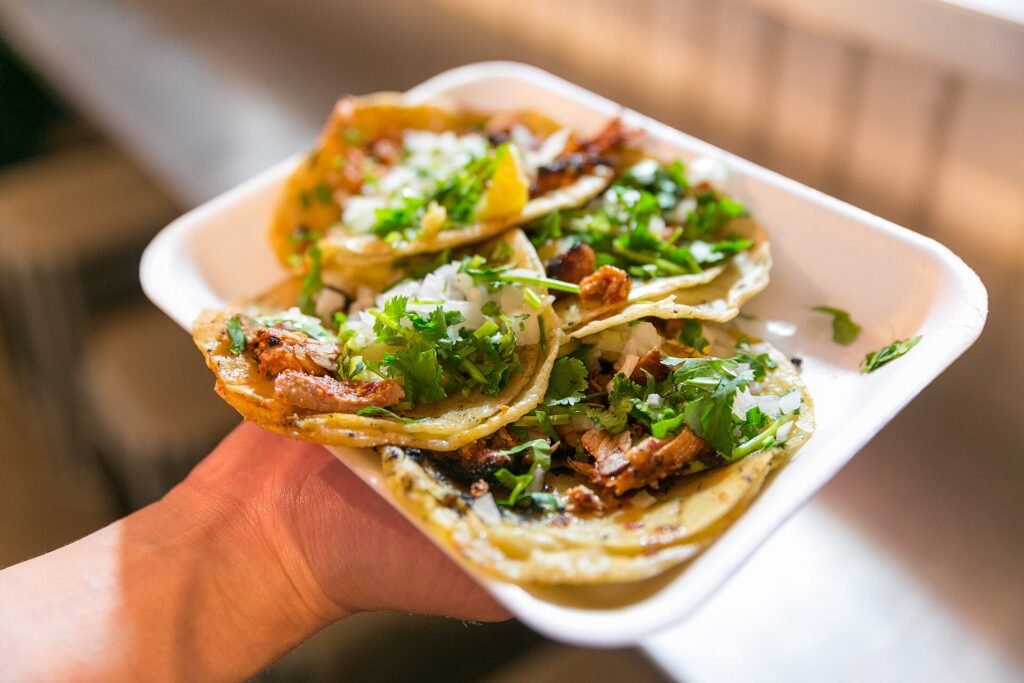
Real al pastor is cooked on a trompo (literally “spinning top”), a vertical spit stacked with marinated pork, crowned with a pineapple and shaved to order by a taquero with a flick of the wrist. Most of us do not have one in the kitchen. Good news: with thin-sliced pork shoulder, a bold adobo and a two-stage cooking method, you can get the charred edges and juicy interior at home.

Ingredients
For the adobo
- 4 dried guajillo chiles, stemmed and seeded
- 2 dried ancho chiles, stemmed and seeded
- 3 tbsp achiote paste
- 1/2 cup pineapple juice
- 1/4 cup white vinegar
- 4 garlic cloves
- 1 tsp dried Mexican oregano
- 1/2 tsp ground cumin
- 2 whole cloves
- 1 1/2 tsp kosher salt
For the tacos
- 2 1/2 lb (1.1 kg) boneless pork shoulder, sliced 1/4 inch thick
- 1/2 fresh pineapple, peeled and cut into 1/2-inch rings
- 16 small corn tortillas
- 1 white onion, finely diced
- 1 bunch cilantro, chopped
- Limes and salsa verde, to serve
Timing
| Stage | Time |
|---|---|
| Prep (toast chiles, blend adobo, slice pork) | 30 minutes |
| Marinate | 4 to 12 hours |
| Broil stacked pork | 25 minutes |
| Rest, slice and sear | 10 minutes |
| Total active time | About 1 hour 5 minutes |
Method
- Toast the guajillo and ancho chiles in a dry skillet for 20 to 30 seconds per side until fragrant. Cover with hot water and soak for 15 minutes.
- Drain the chiles and blend with the achiote, pineapple juice, vinegar, garlic, oregano, cumin, cloves and salt until completely smooth.
- Toss the pork slices in the adobo until every piece is coated. Cover and refrigerate for at least 4 hours, ideally overnight.
- Heat the broiler to high and set a rack about 6 inches from the element. Line a sheet pan with foil.
- Stack the pork slices tightly into a compact “mini trompo” loaf about 4 inches wide on the sheet pan. Lay pineapple rings around it.
- Broil for 20 to 25 minutes, until the top is deeply charred and the center reaches 150°F (65°C). Rest 5 minutes.
- Slice the stack thinly across the layers, then sear the slices in a smoking-hot cast-iron skillet for 1 to 2 minutes to crisp the edges.
- Chop the charred pineapple. Pile pork into warm tortillas and top with onion, cilantro, pineapple, a squeeze of lime and salsa.
Tips for better al pastor
- Slice partially frozen pork. Thirty minutes in the freezer makes 1/4-inch slices easy.
- Do not skip the skillet sear. The broiler cooks; the skillet makes it taste like the taquería.
- Double-stack your tortillas the way street stands do, so juicy pork does not blow through.
- Leftovers make an excellent gringa: al pastor and melted cheese in a flour tortilla.
Curious where this dish came from? Read how Lebanese immigrants gave Mexico al pastor.
Related
- The history: How Lebanese Immigrants Gave Mexico Al Pastor
- Regional guide: Mexico City tacos
- Where to eat it: Taquería El Trompo Feliz
Made this recipe? Leave a comment below and tell us what you changed. Find more ideas in the Salsa Heat Guide and the Taco Glossary.
The 2026 TacoProject Holiday Gift Guide
Every year, friends and family ask us what to buy the taco lover in their lives. So we asked our team what they actually use, love and would be thrilled to unwrap. This is that list: practical tools, pantry staples and a few fun extras, at prices from about $10 to $100.
Some of the items are available in our own TacoProject shop; purchases there support the site and our community events. Others you can find at local Mexican markets and kitchen shops around Austin.
For the home cook
Cast-iron tortilla press
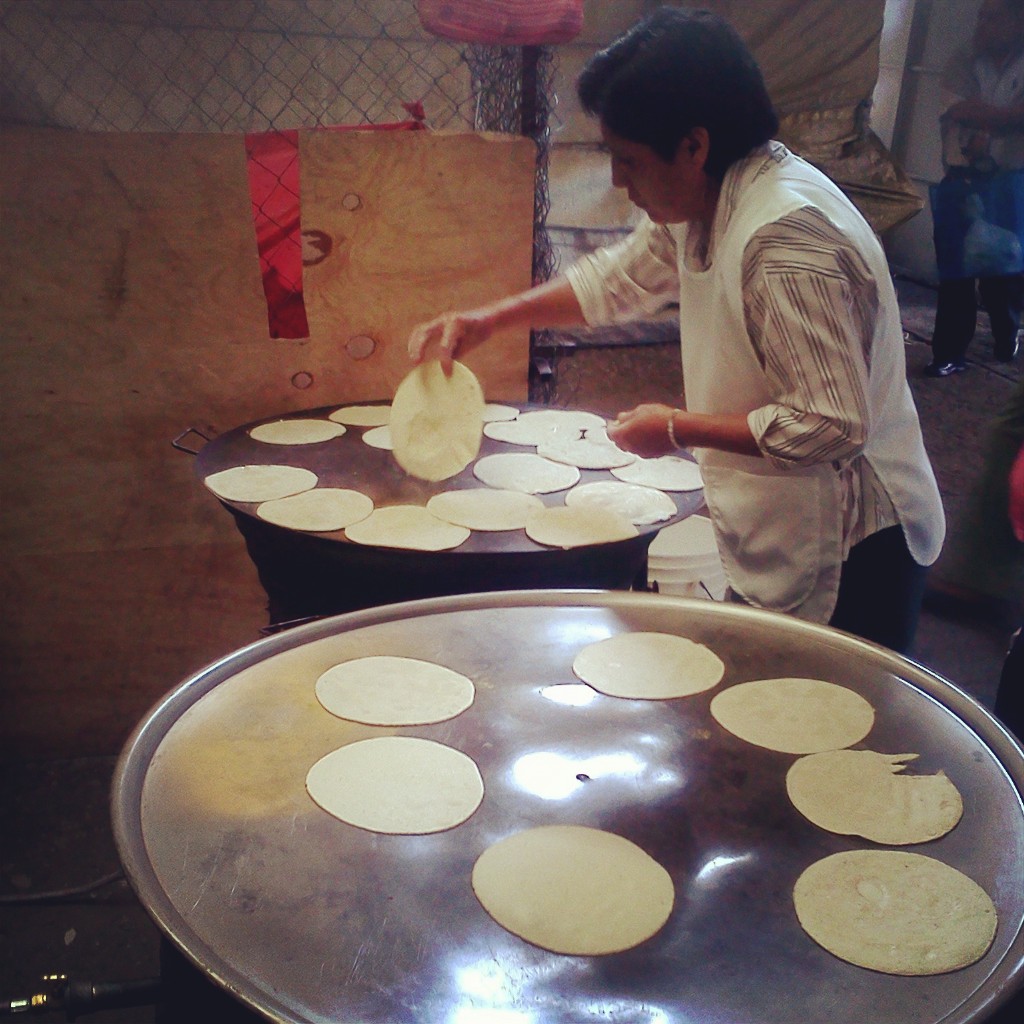
If you buy one thing from this list, make it a good press. Our 8-inch cast-iron tortilla press is heavy enough to press evenly with minimal effort, and it will outlast the rest of your kitchen. It pairs perfectly with our corn tortilla guide.
A proper comal
A flat comal, cast iron or carbon steel, is the most versatile tool in a Mexican kitchen. It warms tortillas, toasts chiles and spices, and chars tomatoes and tomatillos for salsa. Look for one that fits across two burners.

Molcajete
A volcanic stone mortar and pestle for grinding salsas and guacamole. A real molcajete needs to be seasoned by grinding rice a few times before first use, but it makes salsas with a texture no blender can match.
Tortilla warmer
A simple cloth or insulated warmer keeps a stack of tortillas soft and hot throughout dinner. Inexpensive, useful and often beautifully embroidered.
For the pantry
- A dried chile sampler: guajillo, ancho, pasilla, árbol and chipotle. Pair it with a copy of our salsa heat guide.
- Heirloom masa harina or fresh nixtamal corn for the ambitious cook.
- Mexican oregano, achiote paste and canela for al pastor, cochinita and more.
- Good vanilla and piloncillo for holiday baking.
For the taco fan
TacoProject tee
Our TacoProject tee is soft, durable and made for Taco Tuesday. Available in several colors and sizes.
A taco crawl
Plan an Austin taco crawl as a gift. Use our taquería directory and the truck roundup we published in October to build the route.
The best gifts are the ones that get used every week. A press and a comal will.
Elena, TacoProject
Stocking stuffers
Small gifts can be just as useful. A pair of sturdy metal tongs for flipping tortillas, a set of squeeze bottles for homemade salsas, a jar of salsa macha from a local maker, or a bag of Mexican cinnamon for horchata and champurrado all fit neatly in a stocking and will get plenty of use.
Gifts by budget
| Budget | Gift idea |
|---|---|
| Under $25 | Dried chile sampler, tortilla warmer, spice set |
| $25 to $50 | TacoProject tee, carbon steel comal, cookbook |
| $50 to $100 | Cast-iron tortilla press, molcajete, taco crawl |
For the reader
A good cookbook about regional Mexican cooking makes a thoughtful gift for anyone who wants to go deeper than weeknight tacos. Look for books written by cooks from the regions they describe, with chapters on salsas, masa and the dried chile pantry. Pair one with a bag of heirloom corn and a note promising a tortilla-making afternoon together, and you have a gift that turns into an experience.
Gifts for the whole team
Hosting a party or buying for coworkers? A taco night kit makes a great group gift: a bag of masa harina, a jar of homemade salsa, a small bag of dried chiles and a card with our three essential salsas recipe.
Frequently asked questions
When should I order for the holidays?
We recommend ordering from our shop by mid-December for delivery before the holidays. Check the shop page for current shipping times.
What size tortilla press should I buy?
An 8-inch press is the most versatile size for tacos. It makes standard 5- to 6-inch tortillas and smaller street-taco rounds.
Winter Birria Season Is Coming
The first cold snap is on the way, and you know what that means. Forget pumpkin spice. It is birria season.
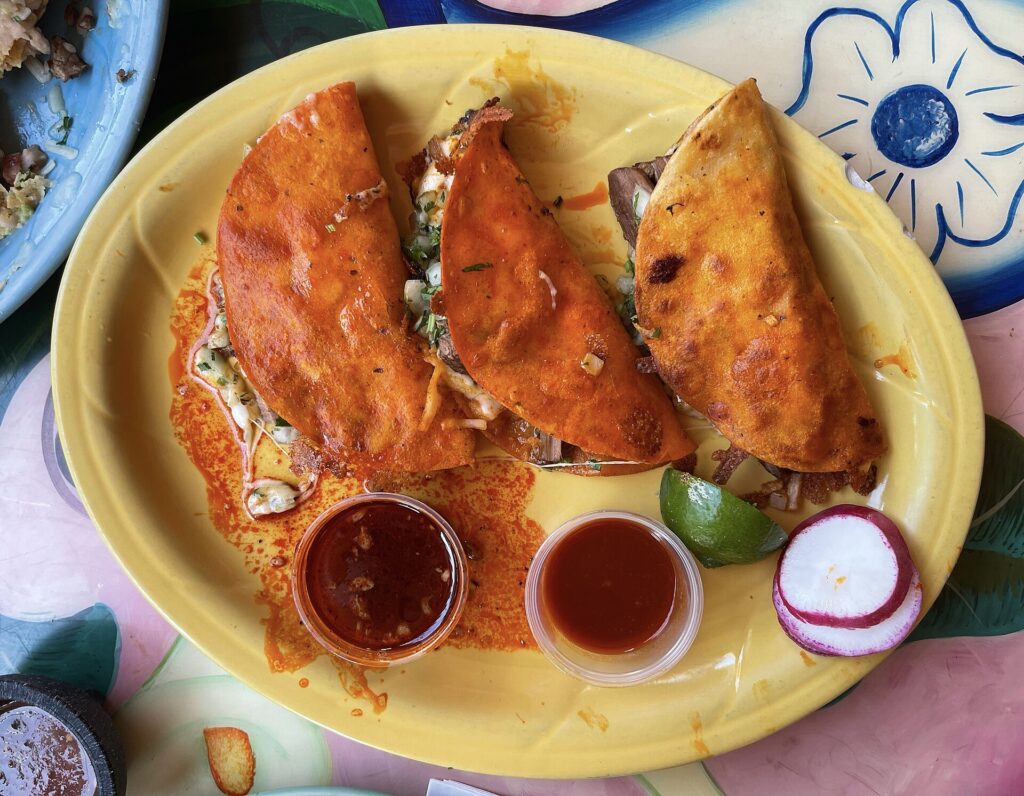

A pot of chile-rich birria bubbling for hours makes the whole house smell incredible. The consommé warms you from the inside. The crispy, cheesy quesabirria tacos practically beg to be eaten on a gray afternoon under a blanket.
Summer is for fish tacos. Winter is for dunking.
Us, every November
Ready to start your own pot? Our slow-cooked birria de res with consommé takes an afternoon and feeds a crowd. Then catch up on everything birria.
Gallery: A Visual Tour of Mexico’s Street Taco Stands
Some of the best tacos in the world are served from a folding table, a bicycle basket or a cart parked on the same corner for thirty years. Street stands, known as puestos, are the heart of Mexico’s taco culture. They are where people grab breakfast on the way to work, lunch between errands and a late-night snack after a long evening.
This gallery collects some of our favorite images of that culture, shared by photographers under open licenses. Each tells a small story about how and where tacos are made and eaten.





Reading the photos
The corner stand
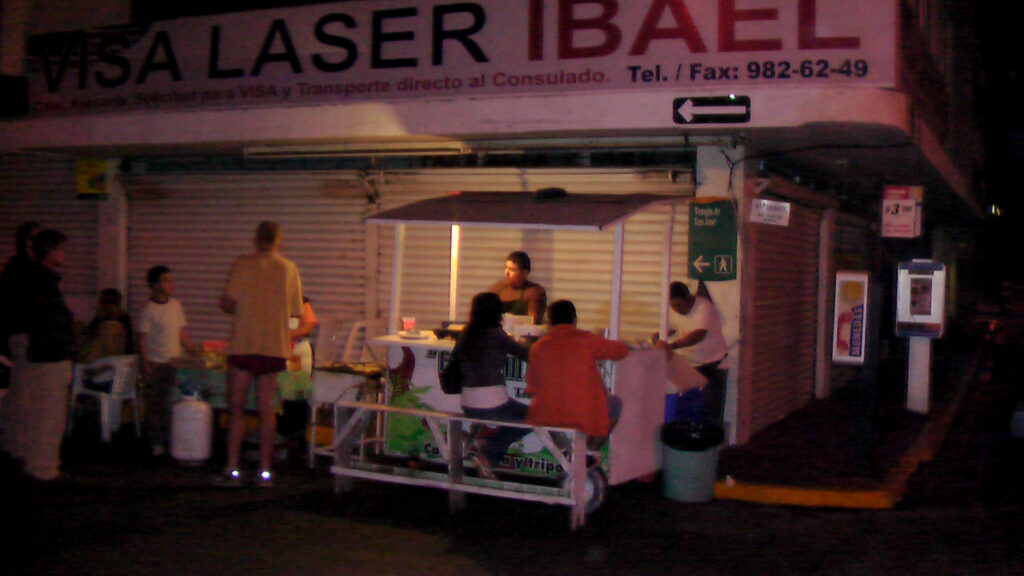
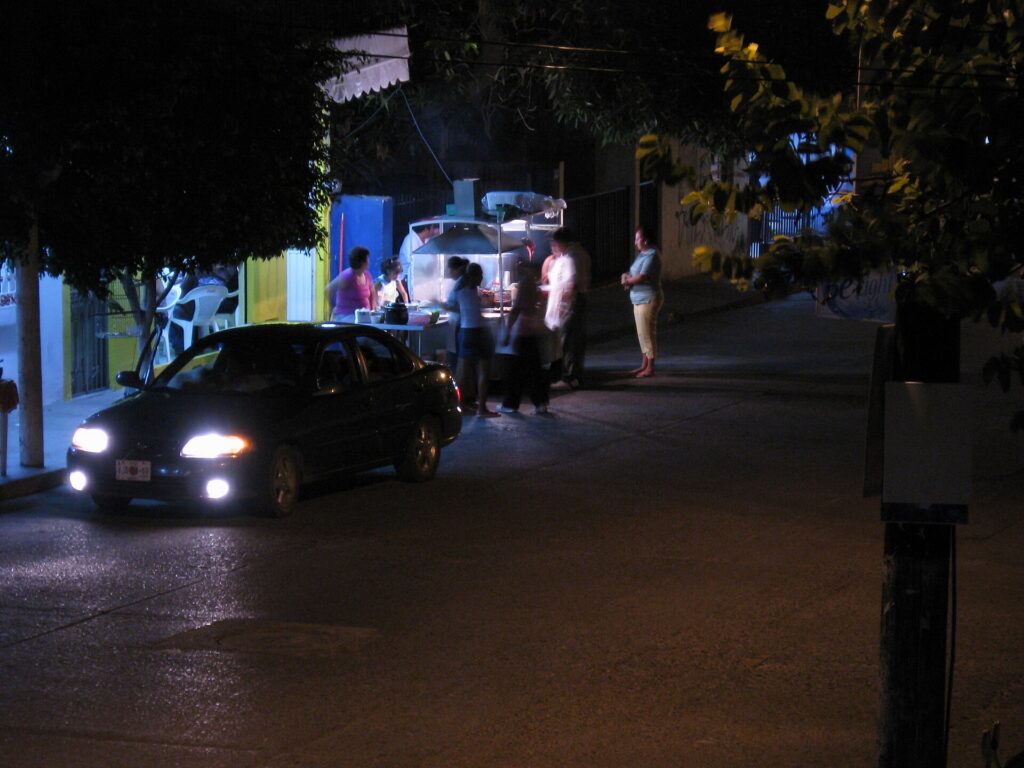
A classic Mazatlán street stand, with a flat-top griddle, a row of salsas and a handful of stools. Stands like this often specialize in just one or two fillings, cooked all day. In coastal Sinaloa, that might mean smoked marlin or shrimp; inland, carne asada or tripa.
Tacos de canasta
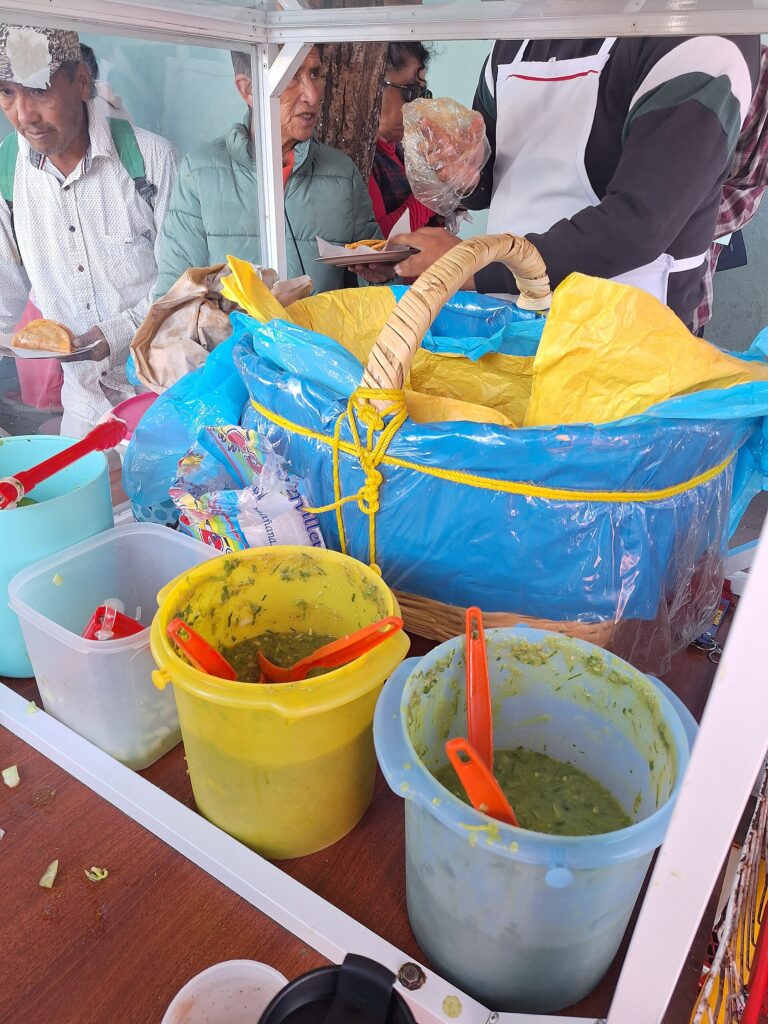
Also called tacos sudados (sweaty tacos), tacos de canasta are filled in the morning, stacked in a cloth-lined basket and left to steam in their own heat. By the time they are sold, the tortillas are soft and infused with fat and flavor. Common fillings include potato, refried beans, chicharrón in salsa and adobo. Vendors often travel by bicycle, and in Mexico City you will spot them outside offices and metro stations. Our Mexico City guide covers them in more depth.
The taquería
A step up from the street stand, the neighborhood taquería has a fixed location, a few tables and usually a longer menu. Many started as street stands and grew with their regulars.
Al pastor and the trompo
The vertical spit is one of the most recognizable sights in Mexico City’s streets, especially at night. The taquero slices meat from the spinning trompo straight onto the tortilla and flicks a piece of pineapple on top. Try our al pastor at home method for a spit-free version.
Ensenada fish tacos
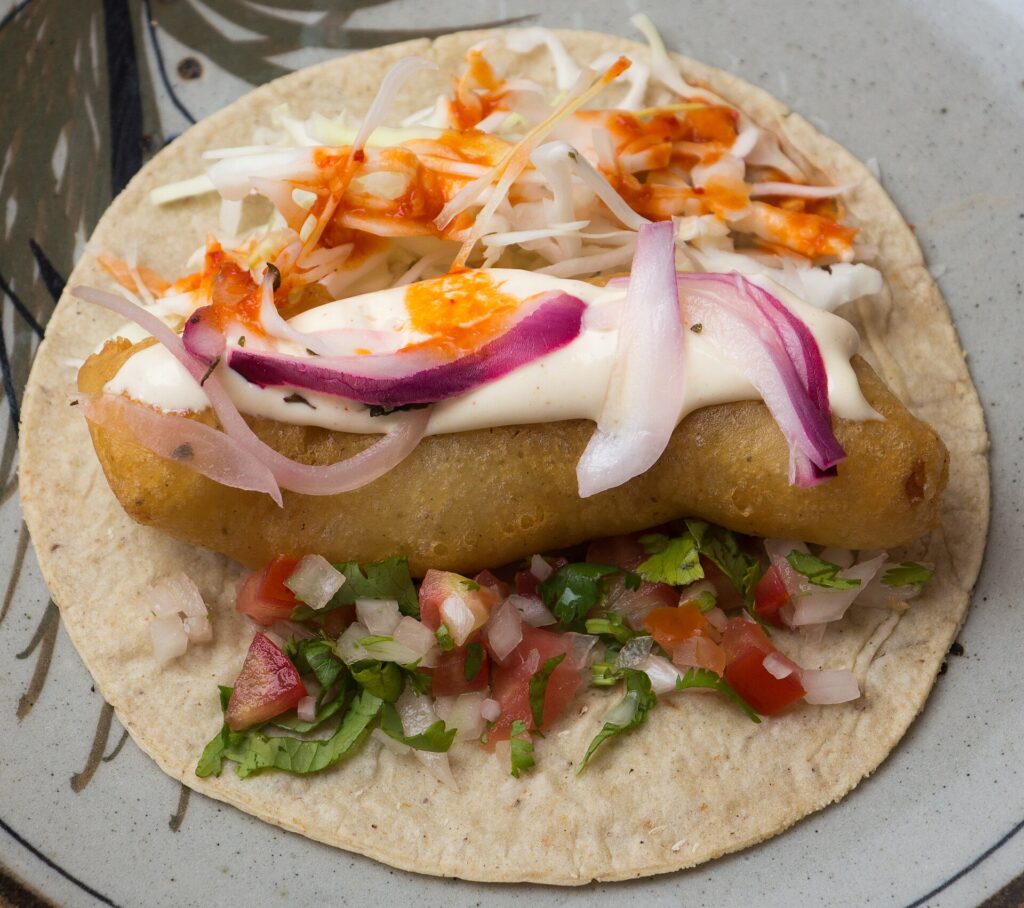
In Baja California, fish taco stands fry battered fish to order and let customers load up at a counter of cabbage, crema, salsas and limes. Read our Baja guide for the whole story.
Cochinita pibil
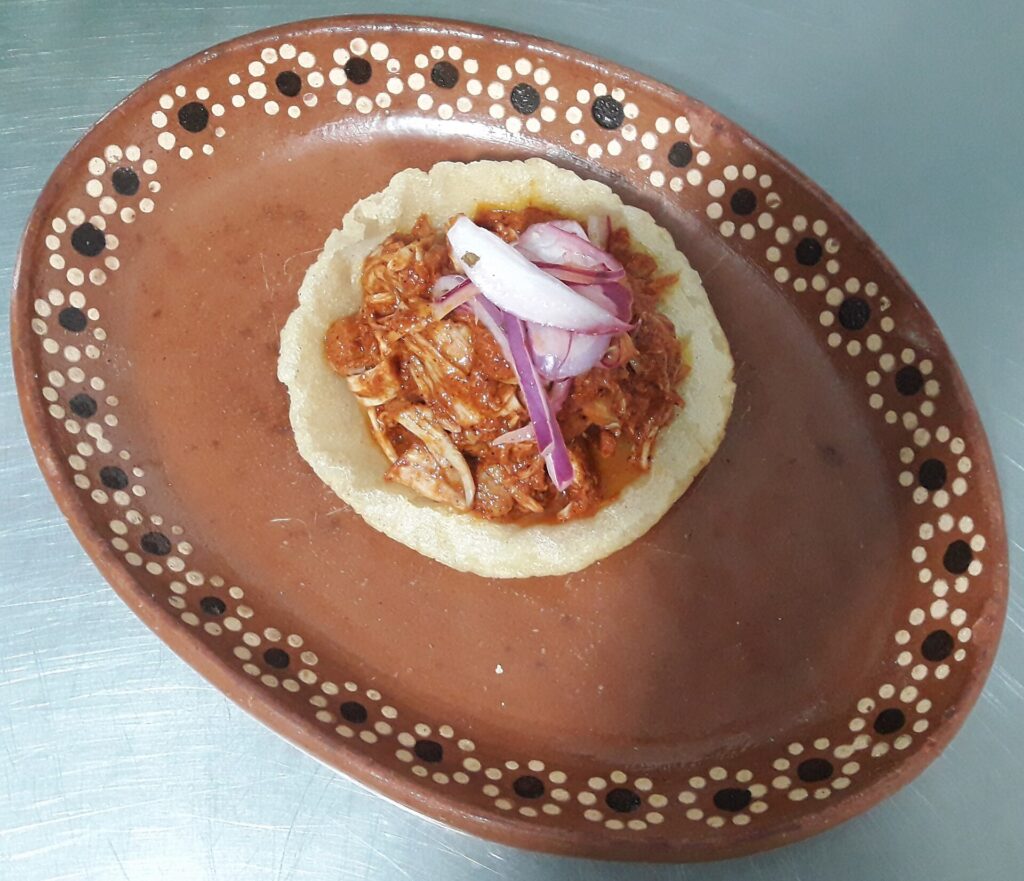
In the Yucatán, cochinita pibil is a morning food, often sold from market stalls and sold out before lunch. The pickled red onions and habanero salsa are nonnegotiable. More in our Yucatán guide.
A street stand does one thing, every day, for years. That repetition is where greatness comes from.
Jamie, TacoProject
How stands shape the taco
It is worth pausing on how much the format of a stand shapes the food itself. A street cook has limited space, limited equipment and customers who expect to eat standing up in a few minutes. That is why street tacos are small, usually built on two stacked tortillas for strength, and filled with meats that can be held hot for hours without drying out: braises, confits, spit-roasted pork and griddled cuts kept moist in their own fat. The salsas do the customizing, and the tortilla does the rest.
The same logic applies to Austin’s trucks. A truck kitchen is a street stand on wheels, and many of the best ones in town cook exactly this way: one or two fillings done very well, a short salsa bar and a line that moves. See our October roundup of Austin taco trucks for the ones we keep going back to.
Street stand etiquette
- Watch what the regulars order, and order that.
- Ask for tacos by number: dos de pastor, tres de suadero.
- Salsas are self-serve; taste a little before committing.
- Pay at the end: tell the taquero how many tacos you had.
- Unfamiliar terms? Keep our taco glossary handy.
Closer to home, Austin’s own truck and stand culture continues to thrive. Find our favorites in the taquería directory.
Reader Mailbag: Tortillas, Salsa Storage and Reheating Tacos
Every few months we gather the questions you send us by email and on social media and answer as many as we can. This round, many of you wrote in about tortillas, which makes us very happy, plus salsas, leftovers and gear. Questions have been lightly edited for length.
Tortillas
“My homemade corn tortillas crack at the edges. What am I doing wrong?”
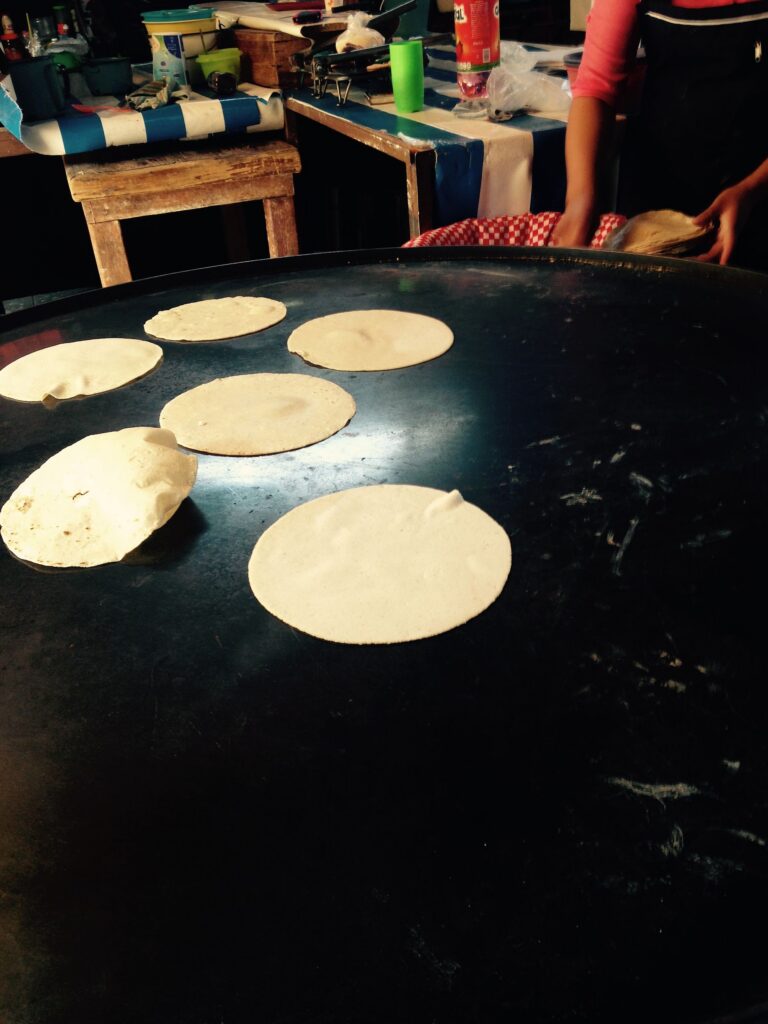
This is the most common question we get, and the answer is almost always water. The dough should feel like soft play clay and not crack when you press a ball between your palms. Add water a tablespoon at a time, knead, and rest the dough, covered, for 15 to 20 minutes before pressing. Also check that your comal is hot enough; tortillas cooked too slowly dry out. Our tortilla guide has photos of what the dough should look like.
“Is it worth making fresh masa from scratch?”
If you love cooking projects, absolutely. It is a weekend job, but the flavor is remarkable. Start with our new guide on nixtamalizing corn at home. If not, a good masa harina makes very good tortillas, and many Mexican markets in Austin sell fresh masa by the pound.
“Cast iron, aluminum or wood tortilla press?”
Cast iron is our choice: it is heavy, so you press with less effort, and it lasts forever. Aluminum presses are light and affordable but can bend over time. Wooden presses are beautiful and traditional, just larger. Whatever you choose, line it with two pieces of a cut zip-top bag, not plastic wrap.

Salsas
“How long does homemade salsa really last?”
| Salsa | Refrigerator | Freezer |
|---|---|---|
| Pico de gallo | 1 to 2 days | Not recommended |
| Cooked salsa verde or roja | 5 to 7 days | Up to 3 months |
| Avocado salsa | 2 to 3 days | Not recommended |
| Oil-based salsas (macha, negra) | Up to 2 weeks | Up to 3 months |
Always store salsa in a clean, airtight container and use a clean spoon. When in doubt, throw it out. Our three essential salsas include storage notes for each.
“Why is my salsa verde bitter?”
Most often it is overcooked tomatillos, or garlic that burned during roasting. Simmer tomatillos just until they turn olive green, and add a small pinch of sugar or more lime to balance any bitterness.
Leftovers
“What is the best way to reheat birria?”
Reheat the meat in its consommé over low heat on the stovetop, not in the microwave. For crispy quesabirria, dip tortillas in the fat skimmed from the top of the consommé, fill with meat and cheese, and griddle until crisp. The full method is in our birria recipe.
“How do I reheat corn tortillas without them going stiff?”
Heat them on a dry, hot comal or skillet for 20 to 30 seconds per side. If they are a bit dry, sprinkle a few drops of water on each before heating. Wrap them in a towel as they come off the heat so they steam gently.
Most tortilla problems come down to two things: water and heat.
Elena, TacoProject
One last question
“What is the one piece of equipment you would recommend for a new taco cook?”
A heavy comal or cast-iron skillet. It toasts chiles, chars tomatillos, warms tortillas and sears meat. After that, a tortilla press, which you will find in our shop.
Frequently asked questions
How do I send a question for the next mailbag?
Reply to any of our newsletters or reach out on social media. We read everything, even if we cannot answer every question.
Where can I look up unfamiliar terms?
Our taco glossary covers the vocabulary of the taco, from adobada to zacahuil.
Slow-Cooker Barbacoa de Res Tacos for Chilly Weekends
In South Texas, Sunday morning means barbacoa. Traditionally, barbacoa de cabeza was a whole beef head wrapped in maguey leaves and cooked overnight in a pit, and a few places around San Antonio and the Rio Grande Valley still make it that way. Most of us are not digging a pit in the backyard, so here is the version I make at home: beef cheeks or chuck roast, slow-cooked with dried chiles, garlic and warm spices until it pulls apart with a fork.
It takes about 15 minutes of active work, the slow cooker does the rest, and your kitchen will smell incredible. The first cold front of November is the perfect excuse.
| Prep | Cook | Total | Yield |
|---|---|---|---|
| 25 minutes | 8 to 10 hours (low) | About 10 hours | 6 to 8 servings (about 24 tacos) |
Ingredients
- 3 lb beef cheeks or boneless chuck roast, cut into 3-inch pieces
- 2 teaspoons kosher salt
- 4 dried guajillo chiles, stemmed and seeded
- 2 dried ancho chiles, stemmed and seeded
- 2 chipotles in adobo, plus 1 tablespoon adobo sauce
- 1/2 white onion, roughly chopped
- 6 garlic cloves
- 1 teaspoon ground cumin
- 1 teaspoon dried Mexican oregano
- 1/2 teaspoon ground cloves
- 1 tablespoon cider vinegar
- 1 cup beef broth
- 3 bay leaves
To serve
- Warm corn tortillas
- Chopped white onion and cilantro
- Lime wedges
- Salsa verde or salsa roja
- Pickled onions
Instructions
- Season the beef. Pat the beef dry and season all over with salt. For deeper flavor, sear in batches in a hot skillet until browned, though this is optional.
- Toast and soak the chiles. Toast the guajillos and anchos on a dry comal 15 to 20 seconds per side until fragrant, then soak in hot water for 15 minutes.
- Blend the sauce. Blend the drained chiles with the chipotles, adobo, onion, garlic, cumin, oregano, cloves, vinegar and broth until smooth.
- Slow cook. Place the beef in the slow cooker, pour over the sauce and tuck in the bay leaves. Cook on low 8 to 10 hours or high 5 to 6 hours, until the meat shreds easily.
- Shred. Remove the beef, shred with two forks and discard any large pieces of fat. Skim the fat from the cooking liquid.
- Moisten. Return the meat to the pot and toss with enough liquid to keep it juicy. Taste and adjust salt.
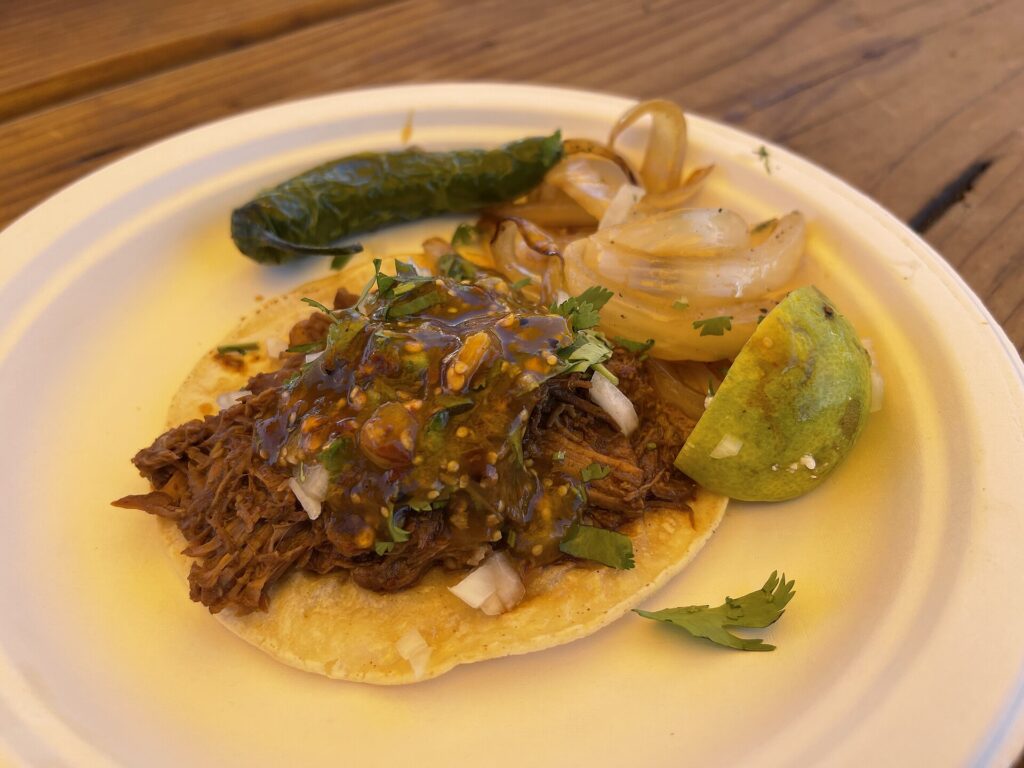
- Serve. Pile the barbacoa on warm tortillas with onion, cilantro, lime and salsa. Serve the extra broth in small cups for sipping.

Beef cheeks vs. chuck roast
Beef cheeks
The traditional choice. Rich, gelatinous and silky, with a texture closer to classic barbacoa de cabeza. Ask your butcher or look at Mexican markets.
Chuck roast
Easier to find and more forgiving. Slightly leaner and more shreddable. Still delicious and a great introduction.
Barbacoa on Sunday morning is as Texan as it gets, and a slow cooker makes it possible for anyone.
Sofia, TacoProject
Oven and pressure cooker methods
- Dutch oven: cover tightly and braise at 300°F for 3.5 to 4 hours.
- Pressure cooker: cook on high pressure for 60 minutes with a natural release.
If you like this, try our birria de res with consommé, which uses a similar chile base with a more dramatic crispy finish.
Frequently asked questions
What is the difference between barbacoa and birria?
Both are slow-cooked meats with dried chiles. Barbacoa refers to the cooking method, traditionally pit-roasted, and in Texas usually means beef cheeks or head. Birria is a Jalisco stew with a more heavily spiced, vinegar-forward chile broth.
Can I freeze barbacoa?
Yes. Freeze in portions with some of the cooking liquid for up to 3 months. Thaw overnight in the refrigerator and reheat gently.
Is it spicy?
It is mild to medium. The guajillos and anchos add flavor more than heat. For more fire, add another chipotle or serve with a spicy salsa from our salsa heat guide.
Serve barbacoa on homemade tortillas for the full experience; our corn tortilla guide walks you through it.
Sonora: Carne Asada, Flour Tortillas and the Tacos of the North
If central Mexico is corn country, Sonora is cattle and wheat country. The state sits along the Arizona border and the Gulf of California, a landscape of desert, ranches and irrigated farmland. Its cooking reflects that: beef grilled over mesquite, flour tortillas so thin you can see light through them, and a style of taco that is simple, smoky and generous.
For Texans, Sonoran food feels familiar and distinct at the same time. We share the ranching culture and the love of flour tortillas, but Sonora has its own way of doing things, and it is one of the most satisfying regional styles to explore.
Why wheat?
Wheat arrived with the Spanish, and it thrived in the arid north, where it grew more reliably than corn in some areas. Over centuries, flour tortillas became the everyday bread of the region. In Sonora they reach their most dramatic form in the tortilla sobaquera, stretched by hand to a diameter of a foot and a half or more, so thin it is nearly translucent. Traditionally made with lard, they are cooked briefly on a large comal and folded in quarters to serve.
Carne asada, the Sonoran way
Sonoran beef has a reputation throughout Mexico, and carne asada is the regional ritual. The meat, often thin-cut arrachera (skirt) or diezmillo (chuck), is seasoned with little more than coarse salt and grilled over mesquite coals. The smoke does the rest. At taquerías in Hermosillo, the beef is chopped fresh from the grill and served on corn or flour tortillas with a spread of condiments: guacamole, salsa, grilled green onions, cucumbers and radishes.
In Sonora, the seasoning is salt and the smoke is mesquite. Everything else is a condiment.
Marcus, TacoProject
Tacos and dishes to know
- Carne asada tacos: mesquite-grilled beef on corn or flour tortillas, with a self-serve condiment bar.
- Caramelos: a flour tortilla with melted cheese and carne asada, folded like a quesadilla.
- Burros: the Sonoran burrito, a large, thin flour tortilla wrapped around beans, beef or machaca.
- Machaca: dried, shredded beef, often scrambled with egg for breakfast.
- Cahuamanta: a stew of manta ray and shrimp from the coast near Guaymas, also served in tacos.
- Sonoran hot dogs: bacon-wrapped franks with beans, tomato and mayonnaise, famous on both sides of the border.
- Coyotas: flaky, flat pastries filled with piloncillo, a specialty of Hermosillo.
The salsa bar
Sonoran taquerías are known for generous condiments. A creamy guacamole-style salsa, a fiery chiltepín salsa, and a thin tomato salsa are common. The chiltepín, a tiny, wild chile that grows in the Sonoran desert, is intensely hot and adored locally. If you want to cook Sonoran-style at home, the avocado salsa verde in our salsa-of-the-month series is a very close relative of what you will find at the stands, and our salsa heat guide can help you pace the chiltepín.
Sonora vs. Tex-Mex
| Sonora | Tex-Mex | |
|---|---|---|
| Tortilla | Very thin flour, sobaquera | Thicker flour, often with baking powder |
| Beef | Mesquite-grilled, salt only | Fajitas, often marinated |
| Cheese | Queso fresco, Chihuahua | Cheddar, yellow cheese |
| Signature chile | Chiltepín | Jalapeño |
How to cook Sonoran at home
- Buy good skirt steak and season generously with coarse salt 30 minutes before cooking.
- Grill over mesquite charcoal or lump charcoal with a few mesquite chunks, as hot as you can.
- Chop the beef finely right off the grill.
- Serve with thin flour tortillas, guacamole, grilled green onions and a hot salsa.
- Make caramelos with any leftovers.
For a crowd, follow our game-day carne asada taco bar, but skip the citrus marinade for a more Sonoran approach.
Sonora is just one of the regions we explore. Continue with Baja, its neighbor across the Gulf of California, or see all of our regional guides.