• Skip to main content

TacoProject

Taco recipes, taquería reviews and regional guides from Austin: al pastor, birria, breakfast tacos, salsas and the stories behind them.

  • Start Here
  • Recipes
  • Styles
    • Baja California
    • Tex-Mex
    • Mexico City
    • Yucatán
  • Reviews
    • The List
    • Taquerías
    • Taco Finder
  • Guides
    • Taco Glossary
    • Salsa Heat Guide
    • Party Taco Calculator
    • Taco FAQ
    • Salsa Library
  • Gallery
  • Shop
    • My Account
    • Cart
  • About
    • Events
    • Contact
    • Privacy Policy

Recipes

Nov 10 2026

Slow-Cooker Barbacoa de Res Tacos for Chilly Weekends

In South Texas, Sunday morning means barbacoa. Traditionally, barbacoa de cabeza was a whole beef head wrapped in maguey leaves and cooked overnight in a pit, and a few places around San Antonio and the Rio Grande Valley still make it that way. Most of us are not digging a pit in the backyard, so here is the version I make at home: beef cheeks or chuck roast, slow-cooked with dried chiles, garlic and warm spices until it pulls apart with a fork.

It takes about 15 minutes of active work, the slow cooker does the rest, and your kitchen will smell incredible. The first cold front of November is the perfect excuse.

PrepCookTotalYield
25 minutes8 to 10 hours (low)About 10 hours6 to 8 servings (about 24 tacos)

Ingredients

  • 3 lb beef cheeks or boneless chuck roast, cut into 3-inch pieces
  • 2 teaspoons kosher salt
  • 4 dried guajillo chiles, stemmed and seeded
  • 2 dried ancho chiles, stemmed and seeded
  • 2 chipotles in adobo, plus 1 tablespoon adobo sauce
  • 1/2 white onion, roughly chopped
  • 6 garlic cloves
  • 1 teaspoon ground cumin
  • 1 teaspoon dried Mexican oregano
  • 1/2 teaspoon ground cloves
  • 1 tablespoon cider vinegar
  • 1 cup beef broth
  • 3 bay leaves

To serve

  • Warm corn tortillas
  • Chopped white onion and cilantro
  • Lime wedges
  • Salsa verde or salsa roja
  • Pickled onions

Instructions

  1. Season the beef. Pat the beef dry and season all over with salt. For deeper flavor, sear in batches in a hot skillet until browned, though this is optional.
  2. Toast and soak the chiles. Toast the guajillos and anchos on a dry comal 15 to 20 seconds per side until fragrant, then soak in hot water for 15 minutes.
  3. Blend the sauce. Blend the drained chiles with the chipotles, adobo, onion, garlic, cumin, oregano, cloves, vinegar and broth until smooth.
  4. Slow cook. Place the beef in the slow cooker, pour over the sauce and tuck in the bay leaves. Cook on low 8 to 10 hours or high 5 to 6 hours, until the meat shreds easily.
  5. Shred. Remove the beef, shred with two forks and discard any large pieces of fat. Skim the fat from the cooking liquid.
  6. Moisten. Return the meat to the pot and toss with enough liquid to keep it juicy. Taste and adjust salt.
  7. Serve. Pile the barbacoa on warm tortillas with onion, cilantro, lime and salsa. Serve the extra broth in small cups for sipping.
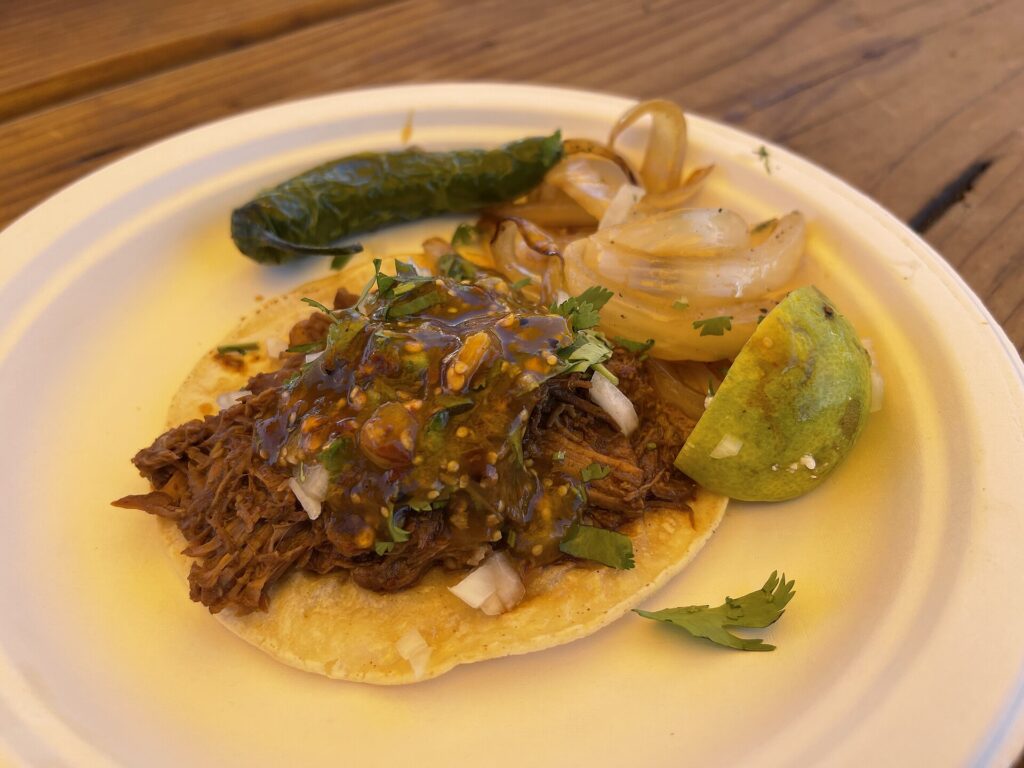
A barbacoa taco
Photo: Missvain / Wikimedia Commons (CC BY 4.0)

Beef cheeks vs. chuck roast

Beef cheeks

The traditional choice. Rich, gelatinous and silky, with a texture closer to classic barbacoa de cabeza. Ask your butcher or look at Mexican markets.

Chuck roast

Easier to find and more forgiving. Slightly leaner and more shreddable. Still delicious and a great introduction.

Barbacoa on Sunday morning is as Texan as it gets, and a slow cooker makes it possible for anyone.

Sofia, TacoProject

Oven and pressure cooker methods

  • Dutch oven: cover tightly and braise at 300°F for 3.5 to 4 hours.
  • Pressure cooker: cook on high pressure for 60 minutes with a natural release.

If you like this, try our birria de res with consommé, which uses a similar chile base with a more dramatic crispy finish.

Frequently asked questions

What is the difference between barbacoa and birria?

Both are slow-cooked meats with dried chiles. Barbacoa refers to the cooking method, traditionally pit-roasted, and in Texas usually means beef cheeks or head. Birria is a Jalisco stew with a more heavily spiced, vinegar-forward chile broth.

Can I freeze barbacoa?

Yes. Freeze in portions with some of the cooking liquid for up to 3 months. Thaw overnight in the refrigerator and reheat gently.

Is it spicy?

It is mild to medium. The guajillos and anchos add flavor more than heat. For more fire, add another chipotle or serve with a spicy salsa from our salsa heat guide.


Serve barbacoa on homemade tortillas for the full experience; our corn tortilla guide walks you through it.
Make corn tortillas

Written by Sofia Tran · Categorized: Recipes · Tagged: Ancho, Barbacoa, Chipotle, Guajillo, Slow Cooked

Oct 23 2026

Halloween Taco Night: Black Bean and Sweet Potato Tacos Dorados with Salsa Negra

Halloween in our house means an early dinner before trick-or-treating, and it needs to be fast, filling and a little bit dramatic. These crispy rolled tacos check every box. The filling is a mash of black beans and roasted sweet potato, the tortillas fry up golden and crackly, and they come to the table with a pool of glossy, nearly black salsa negra that looks spooky and tastes smoky and deep.

Salsa negra is made by frying dried chiles until they are very dark, then blending them with garlic, oil and a touch of sweetness. It is closer to a chile oil than a fresh salsa, and a little goes a long way.

PrepCookTotalYield
25 minutes45 minutes1 hour 10 minutes16 tacos dorados (4 to 6 servings)

Ingredients

Tacos dorados

  • 1 large sweet potato (about 1 lb)
  • 1 can (15 oz) black beans, drained and rinsed
  • 1 teaspoon ground cumin
  • 1/2 teaspoon chipotle powder
  • 1/2 teaspoon salt
  • 1/2 cup crumbled queso fresco (optional)
  • 16 corn tortillas
  • Neutral oil for frying

Salsa negra

  • 10 dried chiles de árbol, stemmed
  • 2 dried guajillo chiles, stemmed and seeded
  • 4 garlic cloves, peeled
  • 1/2 cup neutral oil
  • 1 tablespoon piloncillo or brown sugar
  • 1 tablespoon cider vinegar
  • 1/2 teaspoon salt

To serve

  • Shredded lettuce or cabbage
  • Crema
  • Sliced radishes
  • Guacamole

Instructions

  1. Roast the sweet potato. Prick the sweet potato and roast at 400°F for 40 to 45 minutes, or microwave 8 to 10 minutes, until very soft.
  2. Make the salsa negra. Heat the oil in a small skillet over medium-low. Fry the garlic until golden, then remove. Add the chiles and fry, stirring constantly, until very dark red to nearly black, about 1 minute. Watch closely; you want them deeply toasted, not burnt to ash.
  3. Blend the salsa. Blend the chiles, garlic and oil with the sugar, vinegar, salt and 1/4 cup water until smooth. It will be thick and glossy.
  4. Make the filling. Scoop the sweet potato flesh into a bowl. Add the beans, cumin, chipotle and salt and mash until mostly smooth. Fold in the queso fresco if using.
  5. Soften the tortillas. Warm the tortillas in a microwave under a damp towel for 45 seconds, or briefly on a comal, so they roll without cracking.
  6. Roll. Spread 2 heaping tablespoons of filling along one edge of each tortilla, roll tightly and secure with a toothpick.
  7. Fry. Heat 1/2 inch of oil in a heavy skillet to 350°F. Fry the tacos seam-side down first, turning, until golden and crisp all over, 3 to 4 minutes. Drain on a rack.
  8. Serve topped with lettuce, crema and radishes, with salsa negra for drizzling or dipping.
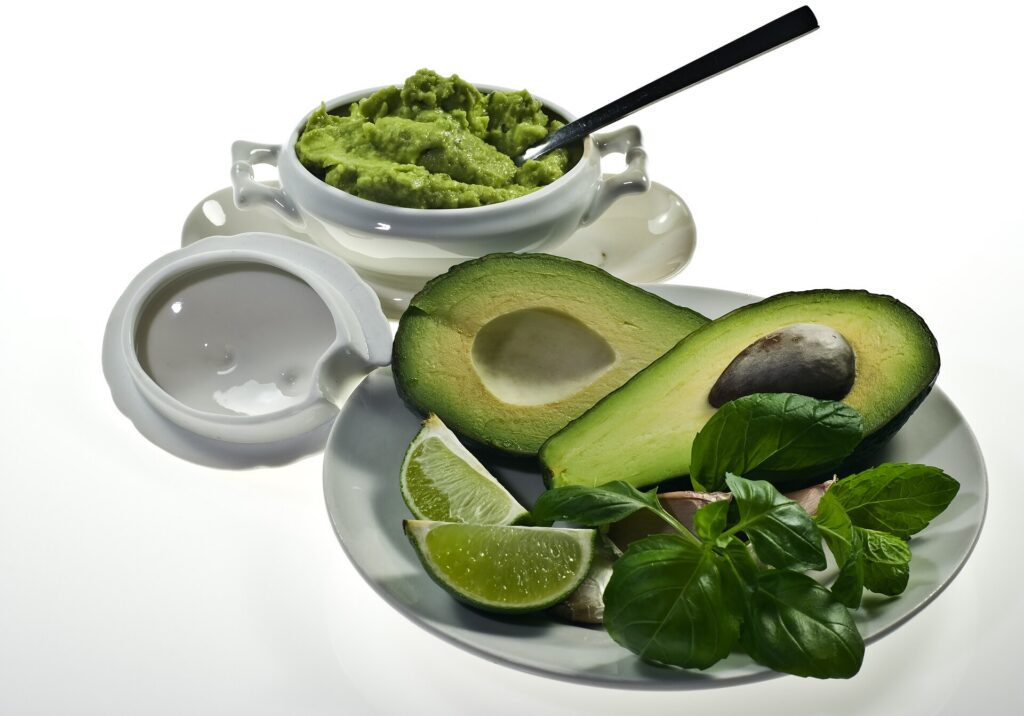
A bowl of fresh guacamole
Photo: Nikodem Nijaki / Wikimedia Commons (CC BY-SA 3.0)

Make it a Halloween spread

  • Guacamole monsters: give kids a bowl of guacamole and let them build faces with radish slices and olive eyes.
  • Crema spiderwebs: pipe concentric circles of crema on the salsa negra, then drag a toothpick outward to make a web.
  • Horchata for the table: a big pitcher of cinnamon-spiced horchata cools things down after all that chile.

Salsa negra looks spooky and tastes smoky. It is the perfect Halloween condiment.

Sofia, TacoProject

Air fryer or oven method

For less oil, brush the rolled tacos with oil and bake on a rack at 425°F for 15 to 18 minutes, or air fry at 400°F for 8 to 10 minutes, turning once. They will be slightly less blistered but still very crisp.

Frequently asked questions

How spicy is salsa negra?

It is quite spicy, with deep smoky flavor. For less heat, use fewer chiles de árbol and more guajillos. See our salsa heat guide for the relative heat of each chile.

Can I make these ahead?

Roll them up to a day ahead and refrigerate, covered. Fry just before serving. Fried tacos can be reheated in a 400°F oven for about 8 minutes.

How long does salsa negra keep?

Because it is oil-based, it keeps in a sealed jar in the refrigerator for up to 2 weeks.


Want the tortillas to be homemade? Our corn tortilla guide explains how to make them sturdy enough for frying.

More salsas

Written by Sofia Tran · Categorized: Recipes, Vegetarian Recipes · Tagged: Chile de Árbol, Crispy, Halloween, Taco Night, Tacos Dorados, Vegetarian

Oct 16 2026

Salsa of the Month: Taquería-Style Avocado Salsa Verde

Every month we pick one salsa to cook, taste and obsess over. For October, we are making the pale green, silky salsa that sits in squeeze bottles at so many taquerías across Texas and northern Mexico. It is not guacamole and it is not a standard salsa verde. It lives somewhere in between: tangy from tomatillos, rich from avocado, and thin enough to drizzle.

It is the salsa people ask about most. It goes with nearly everything, from carnitas and carne asada to fish tacos and breakfast tacos, and it takes ten minutes. If you have already made the classic tomatillo salsa from our three essential salsas post, this is its creamy cousin.

PrepCookYieldHeat
10 minutes10 minutesAbout 2 cupsMedium

Ingredients

  • 1/2 lb tomatillos (about 5 medium), husked and rinsed
  • 1 to 2 serrano chiles, stemmed (use 1 for medium heat)
  • 1 garlic clove
  • 1 large ripe avocado
  • 1/2 cup cilantro leaves and tender stems
  • Juice of 1 lime
  • 1 teaspoon kosher salt, plus more to taste
  • 1/4 to 1/2 cup water

Instructions

  1. Simmer the tomatillos and chiles. Place tomatillos and serranos in a small saucepan, cover with water and simmer until the tomatillos turn olive green and soften, 6 to 8 minutes. Do not let them burst.
  2. Cool slightly. Drain and let cool for a few minutes. Hot tomatillos can turn avocado brown.
  3. Blend. Add tomatillos, serranos, garlic, avocado, cilantro, lime juice and salt to a blender with 1/4 cup water. Blend until completely smooth.
  4. Adjust. Add more water for a pourable consistency, and season with salt and lime. It should taste bright and a little too salty on its own; it will balance out on a taco.
  5. Chill. Transfer to a squeeze bottle or jar and refrigerate at least 20 minutes before serving.
A bowl of fresh guacamole
Photo: Nikodem Nijaki / Wikimedia Commons (CC BY-SA 3.0)

Variations

Raw (cruda)

Skip the simmer and blend raw tomatillos for a sharper, more acidic salsa. Great with fish and seafood.

Roasted

Char the tomatillos and chiles under the broiler for a smoky, deeper flavor. Excellent with grilled meats.

Extra creamy

Add a spoonful of Mexican crema or a few tablespoons of oil while blending for a richer, emulsified salsa.

It should taste a little too salty on its own. On a taco, it will be exactly right.

Sofia, TacoProject

What to pair it with

  • Crispy carnitas or al pastor
  • Grilled carne asada and cebollitas
  • Battered fish tacos in the Baja style
  • Egg and potato breakfast tacos
  • Tortilla chips, obviously

A little history

Avocado-based table salsas have been part of northern Mexican taquerías for generations, where they were a thrifty way to stretch expensive avocados into a sauce that could dress dozens of tacos. The squeeze-bottle version spread north with taqueros who opened shops across Texas and California, and today many diners know it simply as the green sauce. Every taquería has its own ratio, and some add a little cooked onion or a splash of the tomatillo cooking water.

Why does it separate?

If you see a little water pooling after a day in the fridge, just shake or stir. If you want it fully stable, blend in a tablespoon of neutral oil at the end to create an emulsion. The lime and tomatillo acid help keep the color, but it is always best within two days.

Frequently asked questions

How long does avocado salsa verde keep?

Up to 3 days in the refrigerator in an airtight container. Press plastic wrap against the surface to limit browning.

Can I make it without avocado?

Yes; without avocado it becomes a classic cooked salsa verde. For creaminess without avocado, blend in a small handful of toasted pepitas.

How spicy is it?

With one serrano, it is medium. Remove the seeds to tame it or add a jalapeño or second serrano for more heat. Our salsa heat guide compares common chiles.


Next month brings something darker and smokier. Follow along and build your own salsa library one month at a time.

See the salsa heat guide

Written by Sofia Tran · Categorized: Recipes, Salsas & Toppings · Tagged: Cilantro, Guacamole, Quick & Easy, Salsa, salsa of the month, Salsa Verde

Oct 13 2026

How to Nixtamalize Corn at Home for Fresh Masa

Every great corn tortilla starts with a process that is at least three thousand years old. Nixtamalization, from the Nahuatl words nextli (ashes) and tamalli (corn dough), is the practice of cooking and soaking dried corn in an alkaline solution. It loosens the tough outer hull, changes the proteins so the dough holds together, and makes niacin available to the body. Mesoamerican cooks figured this out millennia ago, and the technique is still the backbone of Mexican cooking.

Masa harina, the dried flour we use in our homemade corn tortilla recipe, is simply nixtamalized corn that has been ground and dehydrated. It is convenient and good. But fresh masa made from whole corn has a sweetness, aroma and chew that is hard to describe until you taste it. Here is how to make it at home.

Active timeSoakTotalYield
1 hour8 to 12 hoursAbout 14 hours3 lb masa (about 36 tortillas)

Ingredients and equipment

Ingredients

  • 2 lb dried field corn (dent or flint corn, not popcorn or sweet corn)
  • 4 quarts water
  • 2 tablespoons (about 20 g) food-grade calcium hydroxide, sold as cal or pickling lime
  • Salt, to taste, for the finished masa

Equipment

  • Large non-reactive pot (stainless steel or enameled; never aluminum)
  • Colander
  • Hand-crank grain mill, wet grinder or a strong food processor
  • Kitchen scale
  • A tortilla press and comal for testing

Step-by-step instructions

  1. Rinse the corn. Place the corn in a colander and rinse well, removing any debris or broken kernels.
  2. Dissolve the cal. In the pot, stir the cal into the water until dissolved. It will look milky. Wear gloves if you have sensitive skin; the solution is caustic.
  3. Cook the corn. Add the corn, bring to a boil, then reduce to a gentle simmer. Cook 15 to 30 minutes, until the skins slip off when you rub a kernel between your fingers and the kernels are just starting to soften. Different corn varieties vary widely, so start checking at 15 minutes.
  4. Soak overnight. Remove from the heat, cover and let the corn sit at room temperature 8 to 12 hours. The corn is now called nixtamal.
  5. Wash the nixtamal. Drain and rinse under cool running water, rubbing the kernels between your hands to remove loosened skins. Rinse two or three times. Leaving a little skin on gives more flavor and color; removing more gives a smoother masa.
  6. Grind. Grind the nixtamal in small batches, adding a splash of water as needed. For tortillas, aim for a smooth, slightly tacky dough. Two passes through a hand mill, tightening it on the second, usually does the trick.
  7. Season and knead. Knead in salt to taste and enough water to make a dough that feels like soft play clay and does not crack at the edges when you flatten a ball.
  8. Try a tortilla. Press a ball of masa and cook it on a hot comal. It should puff slightly on the second flip. If it cracks, add water; if it sticks to the press, knead in a little more ground masa.
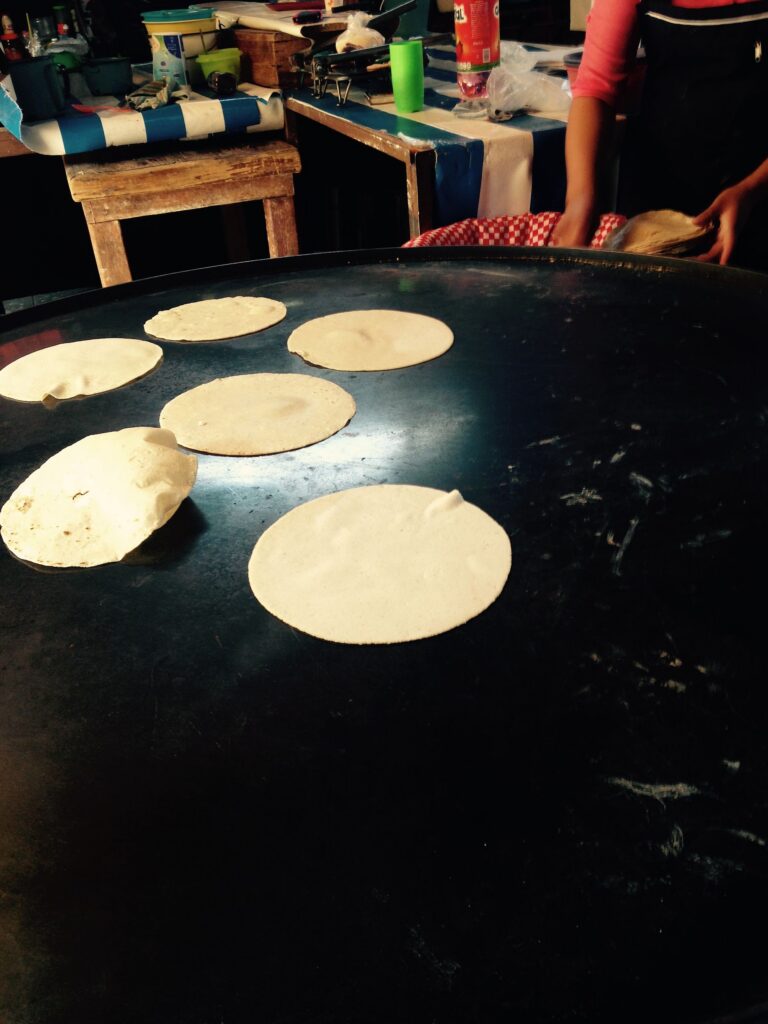
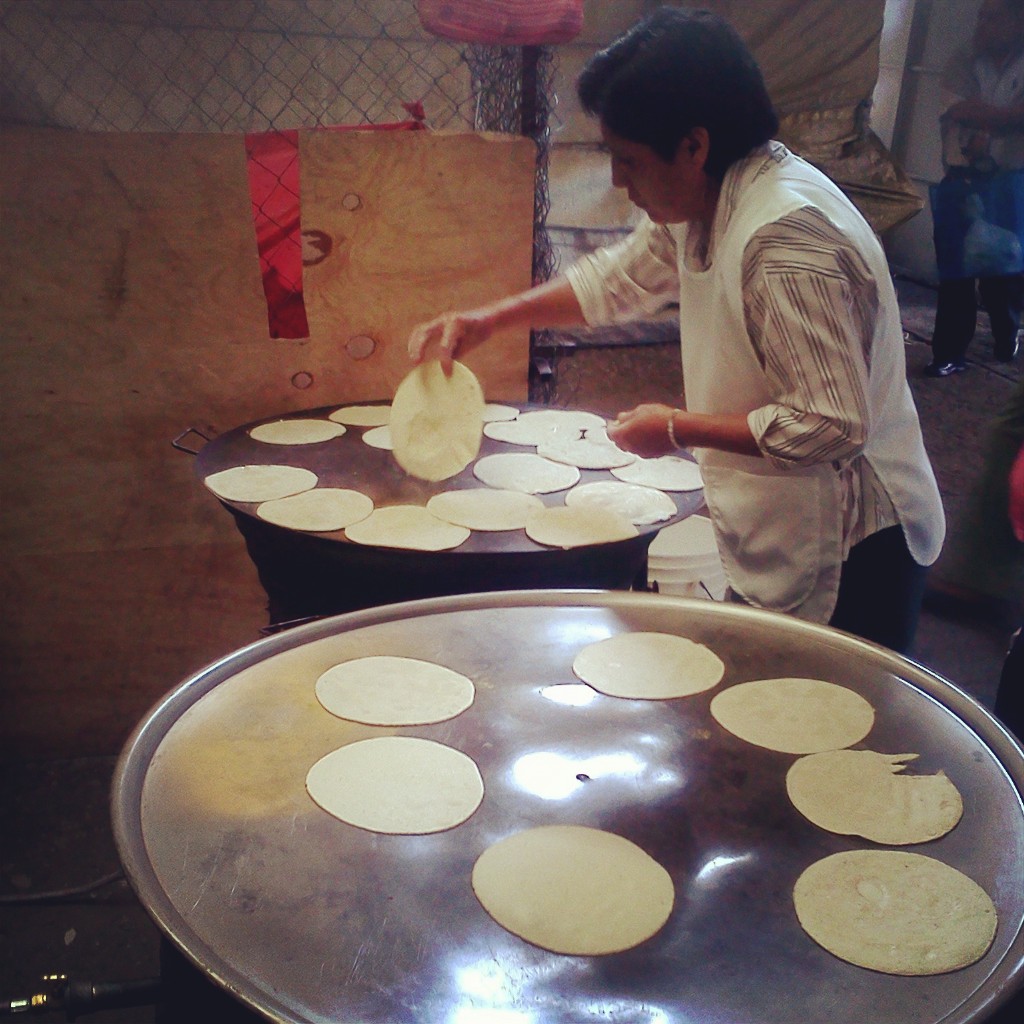
A handmade tortilla on a comal
Photo: Juan Daniel Flores Romero / Wikimedia Commons (CC BY-SA 4.0)

Nixtamal is not a shortcut or a trick. It is the foundation that the rest of the cuisine was built on.

Marcus, TacoProject

Choosing your corn

Field corn comes in white, yellow, blue and red varieties, and each makes a slightly different masa. White is the most neutral and pliable. Yellow tastes a bit sweeter and more robust. Blue corn has an earthy, almost nutty flavor, though it can make a more delicate tortilla. Many heirloom Mexican varieties are now available from specialty importers, and Texas growers are beginning to supply local mills.

Corn typeCook timeFlavorBest for
White dent15-20 minClean, mildEveryday tortillas
Yellow dent20-25 minSweet, richTacos dorados, tostadas
Blue10-15 minEarthy, nuttyQuesadillas, tlacoyos
Red / heirloom15-25 minComplexSpecial occasions

Troubleshooting

  • Masa is gummy: the corn was overcooked. Next time, cook for less time and rely on the overnight soak.
  • Tortillas crack: the dough is too dry or the corn was undercooked. Add water a tablespoon at a time.
  • Bitter or soapy taste: too much cal, or the nixtamal was not rinsed thoroughly.
  • Tortillas do not puff: the comal may not be hot enough. See our tortilla guide for the flip method.

Frequently asked questions

Is calcium hydroxide safe to cook with?

Food-grade calcium hydroxide is safe in the amounts used for nixtamal and has been used for centuries. Handle the dry powder carefully, keep it away from children and wash the corn thoroughly after soaking.

Can I use a blender instead of a mill?

A high-powered blender or food processor can work in small batches with a little water, but the masa will be coarser and wetter. It is better suited to tamales than tortillas.

How long does fresh masa keep?

Fresh masa is best used the same day. Refrigerate it wrapped tightly for up to 2 days, or freeze it in portions for up to a month.


Unfamiliar with some of these terms? Our taco glossary explains nixtamal, cal, comal and more. And if you are ready to press, a heavy cast-iron press makes all the difference.

Shop the tortilla press
Tortilla basics

Written by Marcus Bell · Categorized: Recipes, Taco History · Tagged: History, How-to, Masa, Nixtamal, Tortillas

Oct 09 2026

Game-Day Carne Asada Taco Bar for a Crowd

Football season in Texas means Saturdays spent in parking lots and backyards with a grill going and a cooler full of drinks. After years of burgers and brisket, our crew has settled on the perfect tailgate meal: a build-your-own carne asada taco bar. It feeds a lot of people, it scales easily, and nearly everything can be prepped the night before.

The key is a bright, citrusy marinade and a very hot grill. Skirt or flank steak cooks in minutes, so you can keep a steady stream of fresh tacos coming for the whole first half.

MarinatePrepGrillYield
4 to 12 hours45 minutes10 minutes per batchAbout 36 tacos (serves 12)

Ingredients

Carne asada

  • 5 lb skirt or flank steak
  • 1 cup fresh orange juice
  • 1/2 cup fresh lime juice
  • 1/4 cup olive oil
  • 6 garlic cloves, minced
  • 2 jalapeños, minced
  • 1 bunch cilantro, chopped
  • 2 teaspoons ground cumin
  • 1 tablespoon kosher salt
  • 2 teaspoons black pepper

For the bar

  • 40 corn tortillas (plus a pack of flour for the holdouts)
  • 2 white onions, finely chopped
  • 2 bunches cilantro, chopped
  • Guacamole (6 ripe avocados)
  • Salsa verde and salsa roja
  • Pickled red onions
  • Sliced radishes and lime wedges
  • Grilled green onions (cebollitas)

Instructions

  1. Make the marinade. Whisk together the citrus juices, oil, garlic, jalapeños, cilantro, cumin, salt and pepper.
  2. Marinate the steak. Place the steak in large zip-top bags, pour in the marinade, press out the air and refrigerate 4 to 12 hours. Do not go longer than 12; the citrus will make the texture mushy.
  3. Prep the bar the night before. Chop onion and cilantro, pickle the onions, make your salsas and store everything in lidded containers. Our three essential salsas all keep well overnight.
  4. Heat the grill. Get a charcoal or gas grill as hot as it will go. Remove the steak from the marinade and pat it dry.
  5. Grill in batches. Cook the steak 3 to 5 minutes per side for medium, until well charred. Grill the green onions alongside.
  6. Rest and slice. Rest the steak 5 minutes, then slice thinly against the grain and chop into bite-size pieces.
  7. Warm the tortillas on the grill grate for 20 to 30 seconds per side and keep them in a towel-lined cooler or tortilla warmer.
  8. Make the guacamole last so it stays green: mash avocados with lime, salt, onion, cilantro and minced serrano.
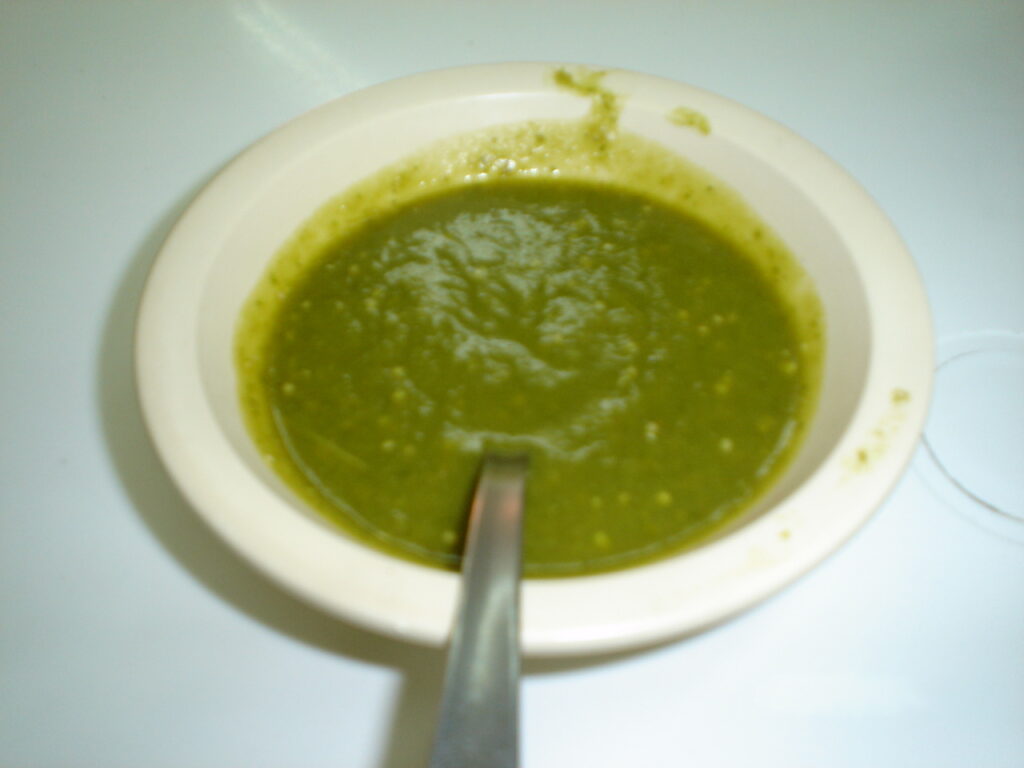
A bowl of salsa verde
Photo: No machine-readable author provided. JED / Wikimedia Commons (CC BY-SA 2.5)

Tailgate logistics

  • Keep cold things cold. Toppings go in a cooler until serving; set them out in small batches and refill.
  • Label your salsas. Guests appreciate knowing which is mild and which is hot. Our salsa heat guide can help you rank them.
  • Bring a cutting board and a sharp knife. Chopping the steak on site keeps it juicy.
  • Pack foil. Leftover meat goes home wrapped and becomes tomorrow’s breakfast tacos.

Slice against the grain, chop it small, and get it into a warm tortilla fast. That is the whole secret.

Elena, TacoProject

Shopping list by the numbers

GuestsSteakTortillasAvocados
62.5 lb203
125 lb406
208 lb6510
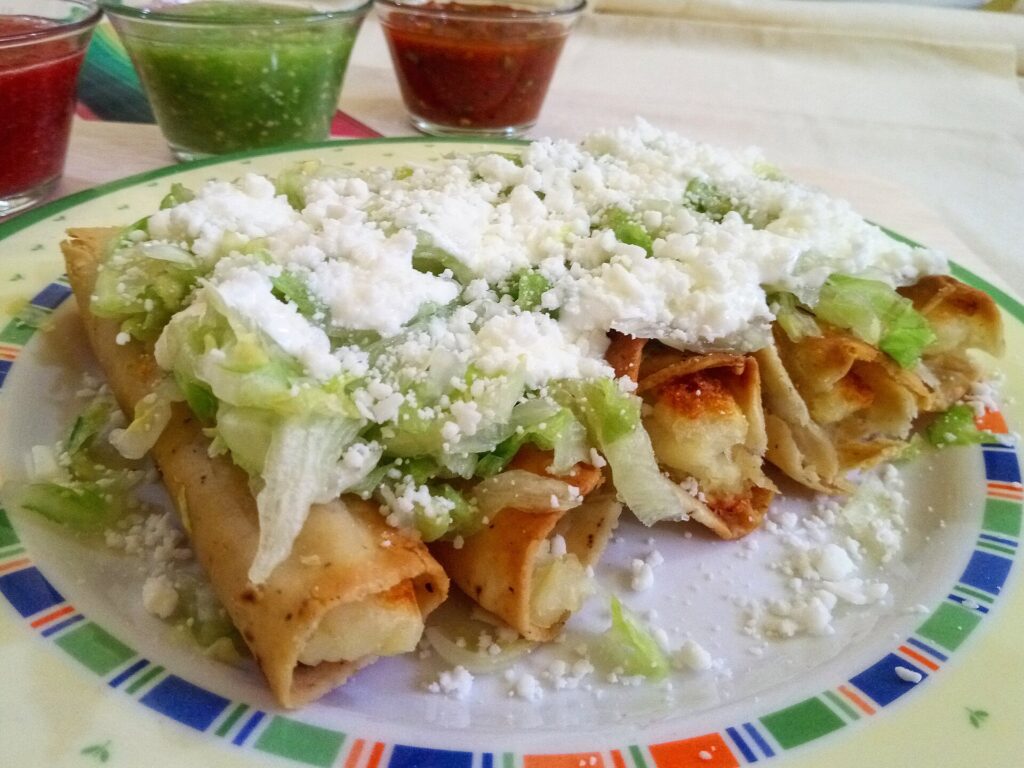
Crispy tacos dorados
Photo: Dahyana Yasada R. R. / Wikimedia Commons (CC BY-SA 4.0)

Want to add a crispy element? Leftover carne asada makes excellent tacos dorados: roll the meat in tortillas, secure with toothpicks and pan-fry until golden. They hold up well in a foil pan for late arrivals.

Frequently asked questions

Skirt or flank steak?

Outside skirt steak is the classic choice and has more flavor and fat. Flank is leaner and easier to find. Both work; just slice either one thinly against the grain.

Can I cook this on a griddle?

Yes. A flat-top griddle or large cast-iron skillet works well. Cook in small batches so the pan stays very hot and the meat sears rather than steams.

How do I keep tortillas warm for a crowd?

Wrap stacks of warm tortillas in a clean kitchen towel and place them in a small, empty cooler. They will stay warm and pliable for an hour or more.


Serving a big group regularly? A good press makes homemade tortillas fast. Check out the gear in our shop.

Shop TacoProject gear

Written by Elena Ruiz · Categorized: Recipes · Tagged: carne asada, Guacamole, Lime, Salsa Verde, Taco Night, tailgate

Oct 02 2026

Roasted Calabaza Tacos with Pepita Salsa and Queso Fresco

The first weekend the farmers market tables fill up with winter squash is my unofficial start of taco season. Calabaza, the Mexican pumpkin with mottled green skin and sweet orange flesh, has been cooked in Mexican kitchens for thousands of years. Squash was one of the original three sisters planted alongside corn and beans, so putting it in a corn tortilla feels exactly right.

These tacos roast cubes of squash until the edges caramelize, then pair them with strips of charred poblano, a nutty pepita salsa and crumbled queso fresco. If you cannot find calabaza, butternut or kabocha squash work beautifully.

PrepCookTotalYield
20 minutes40 minutes1 hour12 tacos (4 servings)

For the squash

  • 2 lb calabaza, butternut or kabocha squash, peeled and cut into 3/4-inch cubes
  • 2 tablespoons olive oil
  • 1 teaspoon ground cumin
  • 1 teaspoon smoked paprika or ancho chile powder
  • 1 teaspoon kosher salt
  • 2 poblano peppers
  • 1/2 white onion, thinly sliced

For the pepita salsa

  • 3/4 cup raw hulled pepitas (pumpkin seeds)
  • 2 dried chiles de árbol, stemmed
  • 1 small garlic clove
  • 1/2 cup lightly packed cilantro
  • Juice of 2 limes
  • 1/3 cup olive oil
  • Salt to taste

To serve

  • 12 corn tortillas, warmed
  • 4 oz queso fresco, crumbled
  • Mexican crema or plain yogurt thinned with lime
  • Lime wedges and extra cilantro

Instructions

  1. Roast the squash. Heat the oven to 425°F. Toss the squash with the olive oil, cumin, paprika and salt. Spread in a single layer on a sheet pan and roast 30 to 35 minutes, flipping once, until browned at the edges and tender.
  2. Char the poblanos. While the squash roasts, char the poblanos directly over a gas flame or under the broiler, turning until blackened all over. Place in a covered bowl for 10 minutes, then rub off the skins, remove the seeds and cut into strips (rajas).
  3. Cook the onion. In a skillet over medium heat, cook the onion with a pinch of salt and a little oil until soft and golden, about 8 minutes. Add the poblano strips and cook 2 minutes more.
  4. Toast the pepitas. In a dry skillet over medium heat, toast the pepitas and chiles de árbol, stirring constantly, until the seeds puff and pop, about 4 minutes. Do not walk away; they scorch quickly.
  5. Blend the salsa. Blend the toasted pepitas and chiles with the garlic, cilantro, lime juice, olive oil and 1/4 cup water until mostly smooth but still slightly textured. Season with salt.
  6. Warm the tortillas on a hot comal or dry skillet for about 30 seconds per side, then stack them in a towel to keep warm.
  7. Assemble. Fill each tortilla with squash and rajas, spoon on pepita salsa, and finish with queso fresco, a drizzle of crema and cilantro.
Corn tortillas cooking on a comal
Photo: Artemisa Martínez / Wikimedia Commons (CC0)

Tips for the best calabaza tacos

  • Cut evenly. Uniform cubes roast at the same rate, so you get caramelized edges without mushy centers.
  • Do not crowd the pan. Use two sheet pans if needed; steamed squash never browns.
  • Fresh tortillas matter. Homemade tortillas make a real difference with mild fillings. Our corn tortilla recipe is the one we use.
  • Want more heat? Add a spoonful of salsa roja from our three essential salsas or check the salsa heat guide to pick your chile.

Squash, corn and beans grew together in the same field for centuries. It only makes sense that they end up on the same plate.

Sofia, TacoProject

Make it vegan

Skip the queso fresco and crema and add a spoonful of refried black beans to each tortilla for richness. The pepita salsa is already dairy-free and brings plenty of body on its own.

Frequently asked questions

Do I need to peel the squash?

For calabaza and butternut, yes; the skin stays tough. Kabocha skin softens when roasted, so you can leave it on if you like the texture.

Can I make the pepita salsa ahead?

Yes. It keeps in the refrigerator for up to 5 days. It thickens as it sits, so loosen it with a splash of water and a squeeze of lime before serving.

What can I use instead of poblanos?

Anaheim or Hatch green chiles are a good substitute. For more heat, use one jalapeño along with a mild pepper.


Want to take these over the top? Press your own tortillas. It takes about 30 minutes and makes every mild, sweet filling taste better.

Make your own corn tortillas

Written by Sofia Tran · Categorized: Recipes, Vegetarian Recipes · Tagged: Crema, Poblano, Queso Fresco, squash, Taco Tuesday, Vegetarian

  • Page 1
  • Page 2
  • Page 3
  • Go to Next Page »
  • About
  • Contact
  • FAQ
  • Taco Glossary
  • Privacy Policy

Copyright © 2026 · Altitude Pro on Genesis Framework · WordPress · Log in