• Skip to main content

TacoProject

Taco recipes, taquería reviews and regional guides from Austin: al pastor, birria, breakfast tacos, salsas and the stories behind them.

  • Start Here
  • Recipes
  • Styles
    • Baja California
    • Tex-Mex
    • Mexico City
    • Yucatán
  • Reviews
    • The List
    • Taquerías
    • Taco Finder
  • Guides
    • Taco Glossary
    • Salsa Heat Guide
    • Party Taco Calculator
    • Taco FAQ
    • Salsa Library
  • Gallery
  • Shop
    • My Account
    • Cart
  • About
    • Events
    • Contact
    • Privacy Policy

Barbacoa

Nov 10 2026

Slow-Cooker Barbacoa de Res Tacos for Chilly Weekends

In South Texas, Sunday morning means barbacoa. Traditionally, barbacoa de cabeza was a whole beef head wrapped in maguey leaves and cooked overnight in a pit, and a few places around San Antonio and the Rio Grande Valley still make it that way. Most of us are not digging a pit in the backyard, so here is the version I make at home: beef cheeks or chuck roast, slow-cooked with dried chiles, garlic and warm spices until it pulls apart with a fork.

It takes about 15 minutes of active work, the slow cooker does the rest, and your kitchen will smell incredible. The first cold front of November is the perfect excuse.

PrepCookTotalYield
25 minutes8 to 10 hours (low)About 10 hours6 to 8 servings (about 24 tacos)

Ingredients

  • 3 lb beef cheeks or boneless chuck roast, cut into 3-inch pieces
  • 2 teaspoons kosher salt
  • 4 dried guajillo chiles, stemmed and seeded
  • 2 dried ancho chiles, stemmed and seeded
  • 2 chipotles in adobo, plus 1 tablespoon adobo sauce
  • 1/2 white onion, roughly chopped
  • 6 garlic cloves
  • 1 teaspoon ground cumin
  • 1 teaspoon dried Mexican oregano
  • 1/2 teaspoon ground cloves
  • 1 tablespoon cider vinegar
  • 1 cup beef broth
  • 3 bay leaves

To serve

  • Warm corn tortillas
  • Chopped white onion and cilantro
  • Lime wedges
  • Salsa verde or salsa roja
  • Pickled onions

Instructions

  1. Season the beef. Pat the beef dry and season all over with salt. For deeper flavor, sear in batches in a hot skillet until browned, though this is optional.
  2. Toast and soak the chiles. Toast the guajillos and anchos on a dry comal 15 to 20 seconds per side until fragrant, then soak in hot water for 15 minutes.
  3. Blend the sauce. Blend the drained chiles with the chipotles, adobo, onion, garlic, cumin, oregano, cloves, vinegar and broth until smooth.
  4. Slow cook. Place the beef in the slow cooker, pour over the sauce and tuck in the bay leaves. Cook on low 8 to 10 hours or high 5 to 6 hours, until the meat shreds easily.
  5. Shred. Remove the beef, shred with two forks and discard any large pieces of fat. Skim the fat from the cooking liquid.
  6. Moisten. Return the meat to the pot and toss with enough liquid to keep it juicy. Taste and adjust salt.
  7. Serve. Pile the barbacoa on warm tortillas with onion, cilantro, lime and salsa. Serve the extra broth in small cups for sipping.
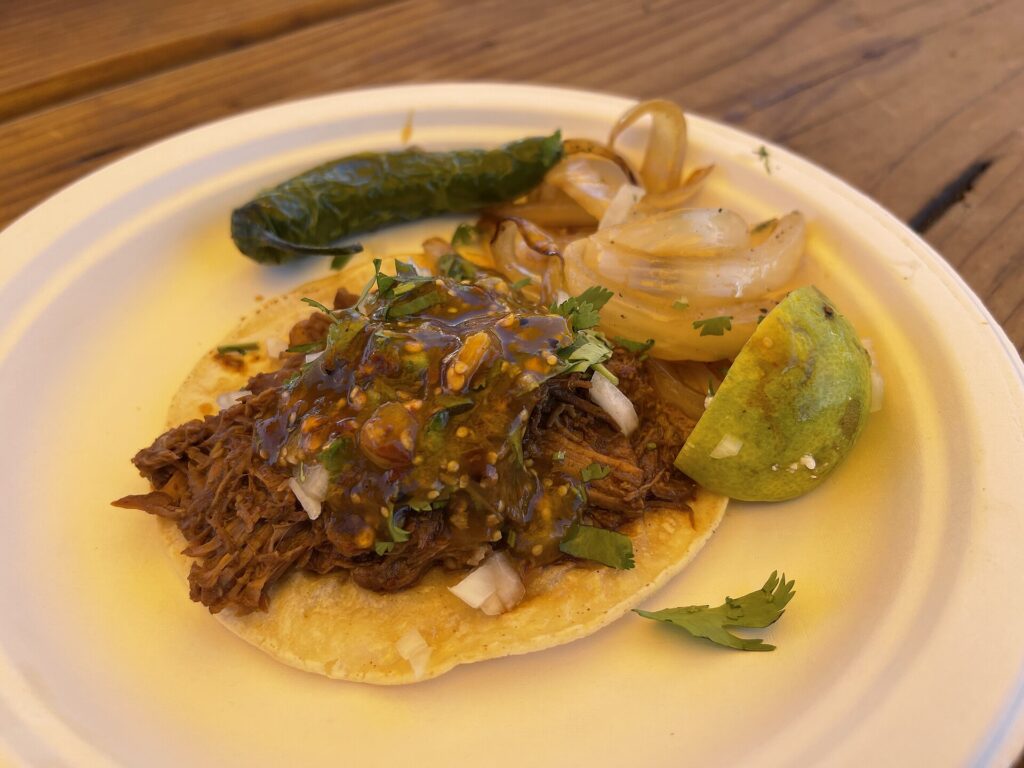
A barbacoa taco
Photo: Missvain / Wikimedia Commons (CC BY 4.0)

Beef cheeks vs. chuck roast

Beef cheeks

The traditional choice. Rich, gelatinous and silky, with a texture closer to classic barbacoa de cabeza. Ask your butcher or look at Mexican markets.

Chuck roast

Easier to find and more forgiving. Slightly leaner and more shreddable. Still delicious and a great introduction.

Barbacoa on Sunday morning is as Texan as it gets, and a slow cooker makes it possible for anyone.

Sofia, TacoProject

Oven and pressure cooker methods

  • Dutch oven: cover tightly and braise at 300°F for 3.5 to 4 hours.
  • Pressure cooker: cook on high pressure for 60 minutes with a natural release.

If you like this, try our birria de res with consommé, which uses a similar chile base with a more dramatic crispy finish.

Frequently asked questions

What is the difference between barbacoa and birria?

Both are slow-cooked meats with dried chiles. Barbacoa refers to the cooking method, traditionally pit-roasted, and in Texas usually means beef cheeks or head. Birria is a Jalisco stew with a more heavily spiced, vinegar-forward chile broth.

Can I freeze barbacoa?

Yes. Freeze in portions with some of the cooking liquid for up to 3 months. Thaw overnight in the refrigerator and reheat gently.

Is it spicy?

It is mild to medium. The guajillos and anchos add flavor more than heat. For more fire, add another chipotle or serve with a spicy salsa from our salsa heat guide.


Serve barbacoa on homemade tortillas for the full experience; our corn tortilla guide walks you through it.
Make corn tortillas

Written by Sofia Tran · Categorized: Recipes · Tagged: Ancho, Barbacoa, Chipotle, Guajillo, Slow Cooked

Oct 27 2026

Día de Muertos: The Foods of the Ofrenda, Explained

Día de Muertos, observed on November 1 and 2, is one of the most meaningful celebrations in Mexico and across Mexican communities in the United States, including here in Austin. It is a time when families remember and welcome back the spirits of loved ones who have died. It is not a Mexican Halloween, and it is not a somber occasion. It is a reunion, full of color, music, stories and, above all, food.

At the center of the celebration is the ofrenda, a home altar built to honor the dead. Families place photographs, candles, marigolds and personal objects on it, along with the favorite foods and drinks of those they are remembering. This post is a guide to those foods and what they mean.

The structure of an ofrenda

Ofrendas vary widely by region and family, but many include several tiers representing the earth and the heavens, and incorporate the four elements: water to quench the thirst of spirits after their journey, candles for fire, papel picado that moves with the wind, and food representing the earth. Bright orange cempasúchil (marigold) petals are often laid in a path to guide the spirits home, their color and scent said to lead the way.

The foods and what they mean

Pan de muerto

The best-known food of the season is pan de muerto, a soft, slightly sweet bread flavored with orange blossom water or orange zest and topped with sugar. The strips of dough across the top are often described as bones, and the ball in the center as a skull or a tear. Regional versions vary: in parts of Oaxaca, the bread is decorated with a small painted face, while in Michoacán and elsewhere you will find different shapes and flavors.

Tamales

Tamales are prepared in large quantities because they are made to be shared with family, neighbors and visitors. Making tamales together, a tamalada, is part of the celebration. Fillings range from pork in red chile to chicken in salsa verde to sweet versions with raisins.

Mole

Mole is a festive dish reserved for special occasions, and few occasions are more important. In Puebla and Oaxaca, a family’s mole recipe may go back generations. Mole negro, with its dozens of ingredients including chiles, chocolate, nuts and spices, is especially associated with the celebration in Oaxaca.

A barbacoa taco
Photo: Missvain / Wikimedia Commons (CC BY 4.0)

Atole and champurrado

Warm, thick drinks made from masa, atole and its chocolate version, champurrado, are served during the cool nights of early November. They are often placed on the ofrenda alongside water, coffee and sometimes the favorite beer or mezcal of the person being remembered.

Sugar skulls and fruit

Calaveras de azúcar, decorated sugar skulls, sometimes bear the name of the deceased. Seasonal fruit like oranges, guavas, tejocotes and sugar cane are also common, as is sweet candied pumpkin, calabaza en tacha.

The ofrenda is not a display. It is an invitation, and food is how you set the table for a guest you love.

Marcus, TacoProject

Regional traditions

RegionNotable foodsTradition
OaxacaMole negro, pan de yema, chocolateElaborate ofrendas and cemetery vigils
MichoacánCorundas, atole, charalesCandlelit vigils at Lake Pátzcuaro
YucatánMucbipollo (pib tamal)Hanal Pixán, the “food of the souls”
Mexico CityPan de muerto, tamalesPublic altars and neighborhood celebrations
PueblaMole poblano, pan de muertoFamily altars, often multi-tiered

In the Yucatán, the celebration is called Hanal Pixán, and families bake a large tamal called mucbipollo in an underground pib oven, the same technique behind cochinita pibil. Read more in our Yucatán guide.

Where do tacos fit in?

Tacos are not traditionally an ofrenda food, but they are very much a part of the gatherings that surround the holiday. Families visiting cemeteries often bring food to share, and in Mexico City, vendors selling tacos de canasta, soft steamed tacos carried in cloth-lined baskets, are a familiar sight at gatherings of all kinds. If a loved one’s favorite food was a plate of tacos from a certain stand, that may well end up on the ofrenda too.

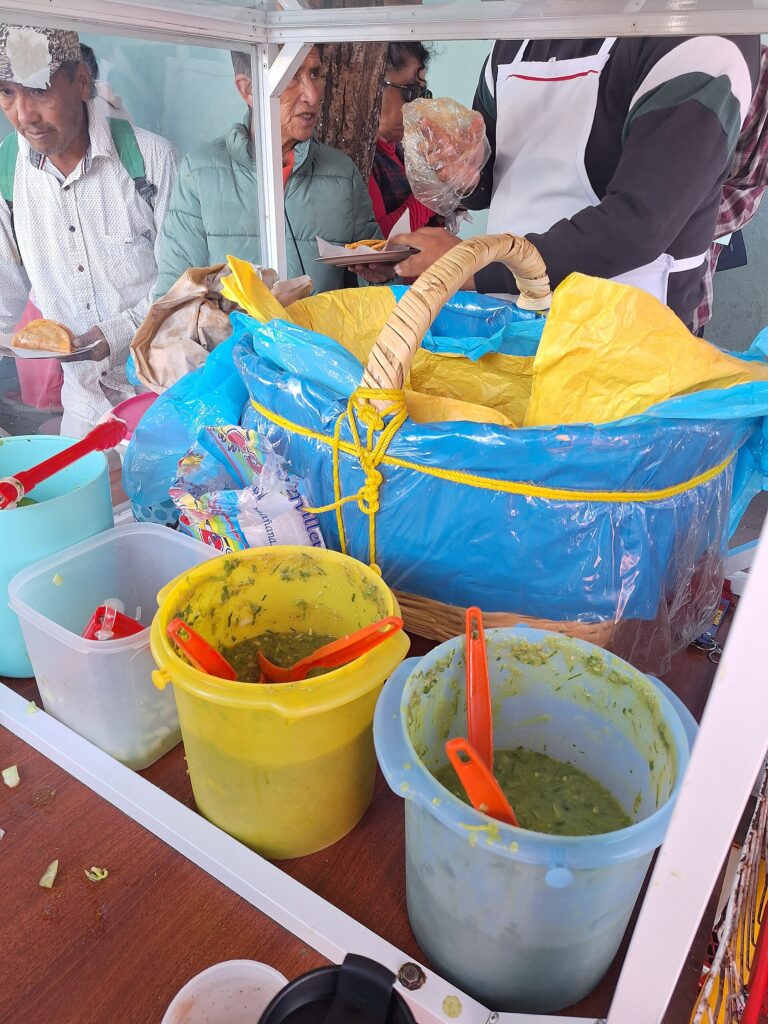
A tacos de canasta street stall
Photo: B.jars / Wikimedia Commons (CC BY-SA 4.0)

Celebrating respectfully

  • Learn about the traditions and their meaning before participating.
  • If you are invited to see a family’s ofrenda, treat it with the same respect you would any memorial.
  • Avoid treating the holiday as a costume party or conflating it with Halloween.
  • Support local Mexican bakeries during the season; many make pan de muerto only in late October and early November.
  • Consider building a small ofrenda of your own for someone you have lost.

This weekend we will share details on our community ofrenda here in Austin. In the meantime, explore more of the stories behind the food in our regional styles hub and taco glossary.

Written by Marcus Bell · Categorized: Taco History · Tagged: Barbacoa, Día de Muertos, History, Mexico City, Tacos de Canasta

Oct 05 2026

Día de los Muertos Taco Pop-Up Announcement

Día de los Muertos, celebrated on November 1 and 2, is a time to remember and honor loved ones who have passed. Families build ofrendas (altars) decorated with marigolds (cempasúchil), candles, photos, and the favorite foods and drinks of the departed.

This year we are hosting a community ofrenda and taco pop-up on Sunday, November 1, from 4 to 8 p.m. on the patio of Taquería Doña Chela on East Riverside Drive. Details below.

Barbacoa tacos with chile rayado salsa
Photo: Daniela Gomez / Wikimedia Commons (CC BY-SA 4.0)

What to expect

  • Michoacán-style carnitas tacos from the Doña Chela kitchen, plus a vegetarian rajas con crema option
  • Pan de muerto and hot champurrado
  • A community ofrenda: bring a photo or a small memento of someone you want to remember
  • Face painting and papel picado crafts for kids

Entry is free; tacos are priced per plate. All proceeds from the champurrado stand go to a local food bank.

See all events

Written by Jamie Okafor · Categorized: Events · Tagged: Barbacoa, Street Food, Taco Tuesday

Jul 14 2025

The Complete Guide to Taco Fillings, A to Z

Walk up to any serious taqueria and the menu board can look like a vocabulary test. Suadero, cabeza, buche, tripa, lengua, campechano: every word is a filling, and every filling has its own history, technique and ideal salsa. This guide is our attempt to put the whole alphabet on one page, from adobada to zarandeado, with notes on how each one is cooked, where it comes from and what we like to eat it with.

It is not a complete encyclopedia. Mexico has thousands of regional variations, and any taquero will happily tell you that their version is the correct one. Think of this as a field guide: enough to order confidently, cook a few at home and know what you are looking at when a new truck opens down the street.

[Read more…] about The Complete Guide to Taco Fillings, A to Z

Written by tacoproject · Categorized: Recipes, Regional Styles · Tagged: Al Pastor, Barbacoa, Birria, Carnitas, Fish Tacos, History, How-to

  • About
  • Contact
  • FAQ
  • Taco Glossary
  • Privacy Policy

Copyright © 2026 · Altitude Pro on Genesis Framework · WordPress · Log in