A quick-reference guide to the words you will see on taqueria menus and in our recipes. Terms are grouped by letter; see something missing? Let us know.
A · B · C · G · L · M · N · P · S · T
A
- Achiote: Paste or seeds of the annatto tree; gives cochinita pibil and al pastor their brick-red color and earthy flavor.
- Adobada: Pork marinated in a red chile adobo; in Tijuana and Baja it is often cooked on a trompo, much like al pastor.
- Al pastor: “Shepherd-style” pork marinated in dried chiles, spices and achiote, cooked on a vertical spit (trompo) and served with pineapple, onion and cilantro. Descended from Lebanese shawarma brought to Puebla and Mexico City.
- Arrachera: Skirt steak, usually marinated and grilled; the classic cut for northern-style carne asada and fajitas.
B
- Barbacoa: Meat slow-cooked in an underground pit, often wrapped in maguey leaves. In Hidalgo and central Mexico it is typically lamb; in northern Mexico and Texas, beef head.
- Birria: A Jalisco stew of meat (traditionally goat, often beef today) braised in a dried-chile adobo, served with its consomé. Tijuana-style birria de res gave rise to crispy quesabirria.
C
- Cabeza: Beef head meat (cheek, etc.), steamed until meltingly tender.
- Campechano: A taco combining two or more meats, often suadero and longaniza.
- Carnitas: Pork simmered slowly in lard until tender and crisp-edged; the signature of Michoacán.
- Cochinita pibil: Yucatecan pork marinated in achiote and sour orange, wrapped in banana leaves and traditionally cooked in a pib (earth oven).
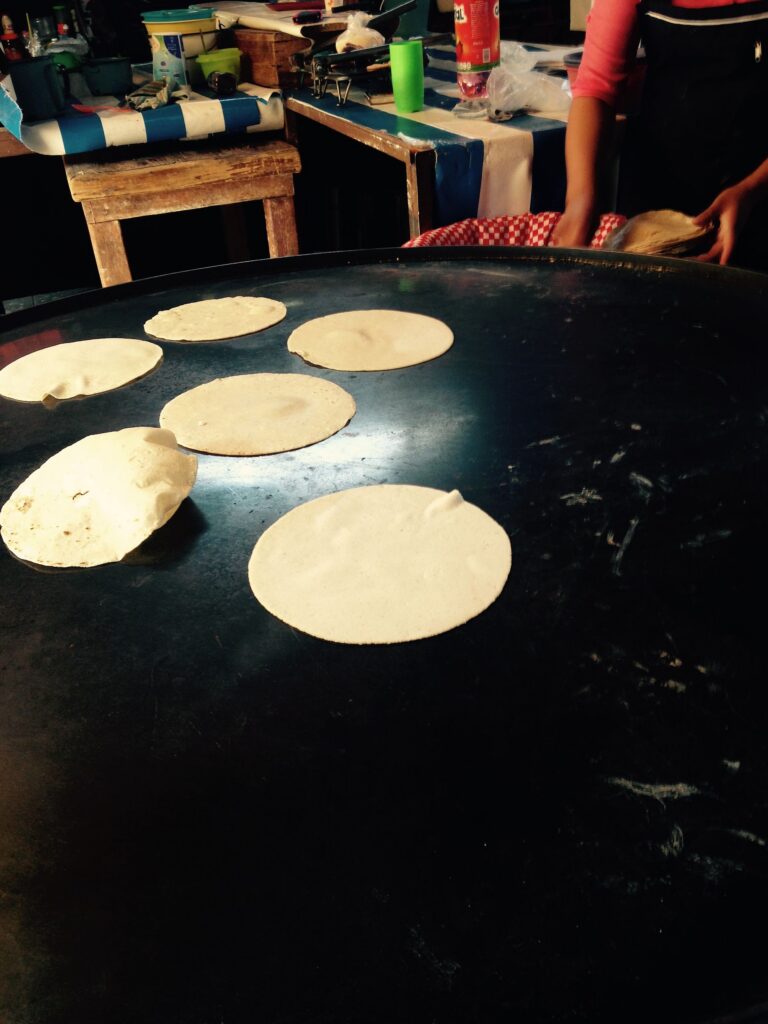
- Comal: A flat griddle, traditionally clay and now often cast iron or steel, used to cook tortillas and toast chiles.
- Costra: A lacy crust of griddled cheese used as a crispy “shell” or topping.
G
- Gringa: Al pastor and melted cheese in a flour tortilla, a Mexico City favorite.
- Guisado: A stew or braise; tacos de guisado feature home-style fillings like chicharrón en salsa verde or tinga.
L
- Lengua: Beef tongue, simmered until tender, then peeled and chopped or seared.
- Longaniza: A long, spiced pork sausage, similar to chorizo; often griddled for tacos.
M
- Machaca: Dried, shredded beef from northern Mexico, frequently scrambled with egg.
- Masa: Dough made from nixtamalized corn, the base of corn tortillas, tamales and more.
- Molcajete: A volcanic-stone mortar and pestle used for grinding salsas and guacamole.
N
- Nixtamalization: Cooking and steeping dried corn in an alkaline solution (usually cal, calcium hydroxide). It softens the hull, improves flavor and dough structure, and frees niacin for digestion. A Mesoamerican technique thousands of years old.
- Nopales: Tender prickly pear cactus paddles, grilled or boiled for tacos.
P
- Pico de gallo: Fresh chopped salsa of tomato, onion, chile and cilantro, also called salsa mexicana.
- Pib: A Maya earth oven: a pit lined with hot stones, used for cochinita pibil.
S
- Salsa macha: An oil-based salsa of fried dried chiles, garlic and often nuts or seeds, from Veracruz.
- Suadero: A thin beef cut from between the belly and leg, confited in fat on a special domed griddle; a Mexico City staple.
T
- Taquero: The taco maker. Respect them.
- Tortilla: A thin flatbread of corn masa or wheat flour; the foundation of every taco.
- Tripa: Beef small intestine, cleaned, simmered and crisped on the griddle.
- Trompo: “Spinning top”: the vertical spit used for al pastor and adobada.

Want to put the vocabulary to work? Try the Regional Taco Styles guide.