The Yucatán peninsula has a cuisine all its own, shaped by Maya traditions, Spanish ingredients, and Caribbean trade. Its most famous dish is cochinita pibil: pork marinated in achiote and sour orange, wrapped in banana leaves, and slow-roasted until it pulls apart with a fork.
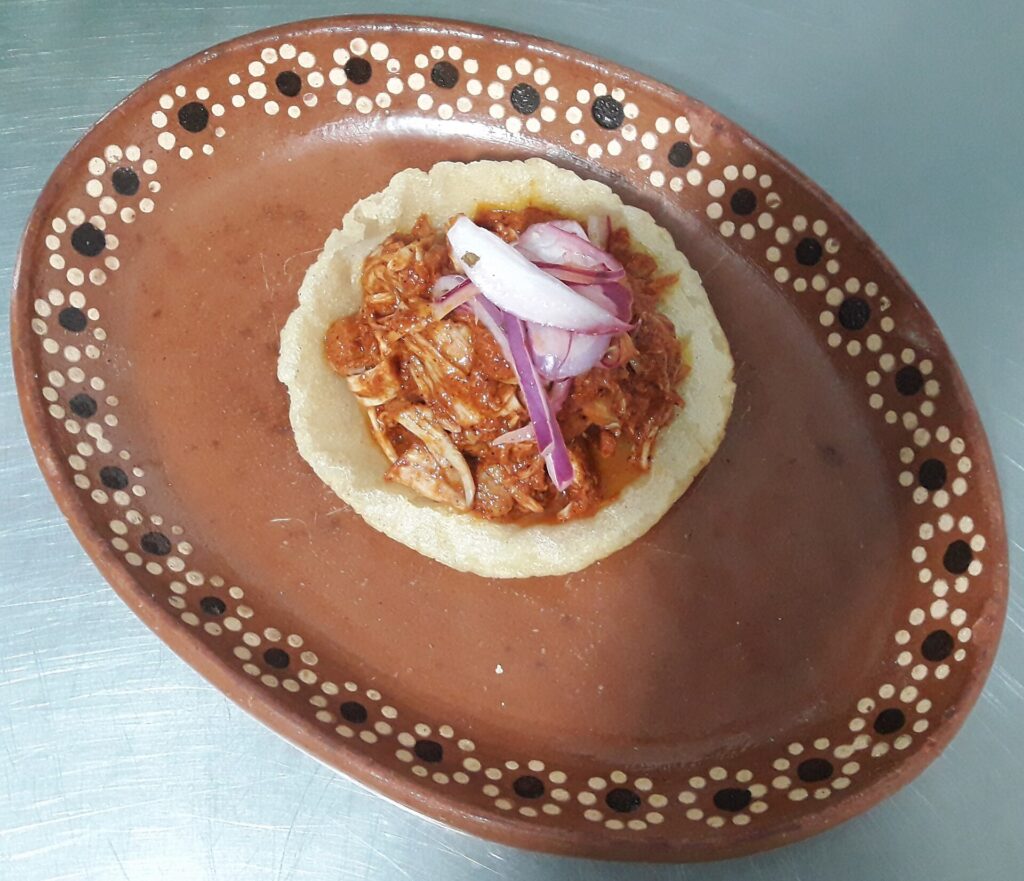

The name
Cochinita means little pig (traditionally a suckling pig). Pibil comes from the Yucatec Maya word pib, an underground earth oven. A pit is dug, lined with stones, and a fire is built until the stones are glowing hot. The wrapped meat goes in, the pit is covered, and hours later dinner emerges smoky and tender.
The flavors
- Achiote (annatto): the seeds of the achiote tree, ground into a brick-red paste (recado rojo) with spices such as cumin, oregano, black pepper, and allspice. It gives cochinita its color and earthy flavor.
- Naranja agria (sour orange): a bitter, tart citrus common in Yucatecan cooking. Outside the region, cooks often approximate it with a mix of orange and lime juice, sometimes with a splash of vinegar.
- Banana leaves: wrapped around the meat to keep it moist and add a subtle, grassy aroma.
Serving it
Cochinita is served in tacos, tortas, and panuchos (fried tortillas stuffed with black beans). The essential topping is cebolla morada encurtida, red onion pickled in sour orange, usually with a fiery slice of habanero, the chile most associated with the peninsula. Sunday mornings in Mérida often mean a cochinita torta and a cold drink.

Other Yucatecan dishes worth hunting down: poc chuc (citrus-marinated grilled pork), relleno negro (turkey in a black chile paste), and sopa de lima. Browse more regional styles.